

September CPI inflation accelerated as U.S. consumer prices increased 0.6% from August and 3.7% from a year earlier. The Bureau of Labor Statistics released the figures on October 14, 2026, covering price changes during September.
Gasoline produced more than half of the monthly increase, while core inflation remained lower than the headline rate. Separate BLS data showed inflation-adjusted hourly and weekly earnings both declined during the month.
September CPI inflation rises with energy costs
The BLS Consumer Price Index release showed that headline CPI rose faster than August’s 0.4% monthly gain. The annual rate increased from 3.4% in August to 3.7% in September.
Core CPI, which excludes food and energy, increased 0.3% for a second consecutive month. Its annual rate reached 2.6%, up from 2.4% in August. The gap between headline and core inflation highlights the effect of energy prices rather than a uniform acceleration across every category.
Readers can review how the indexes are constructed in our Consumer Price Index explainer. BLS uses seasonally adjusted figures for short-term comparisons and unadjusted figures for annual inflation.
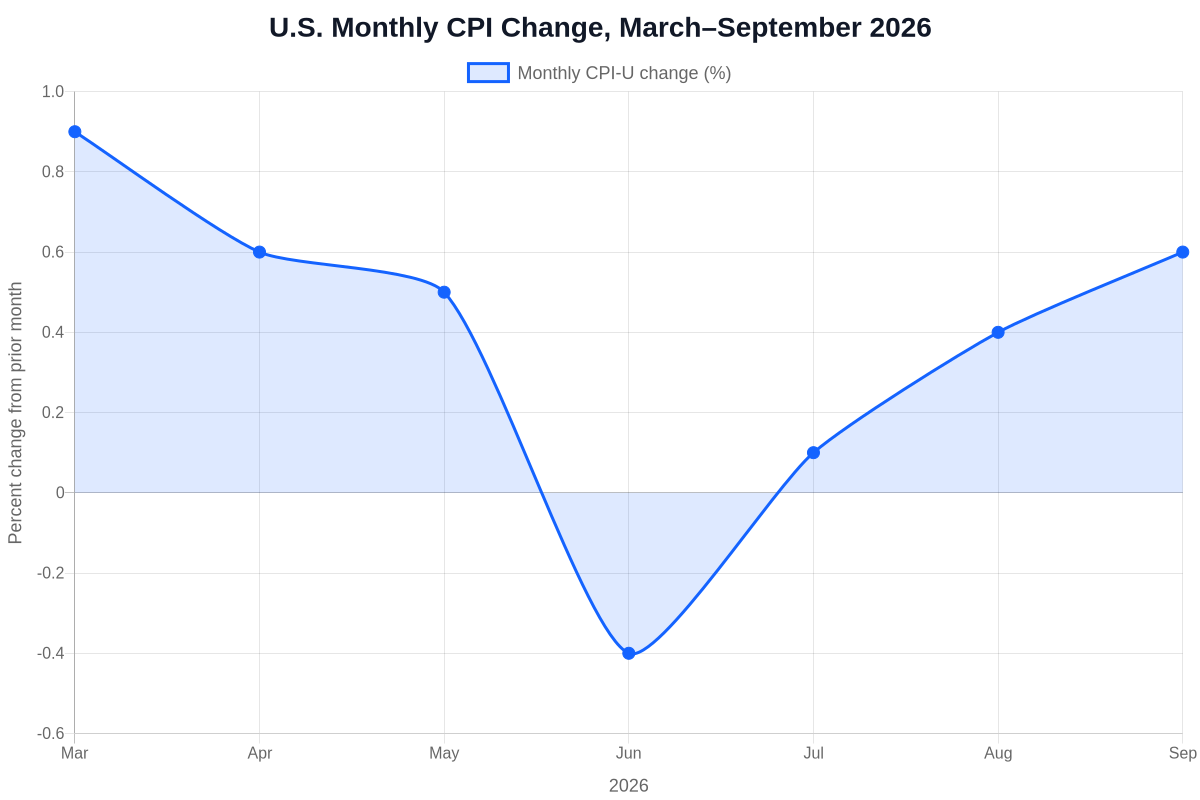
Gasoline drives the September CPI increase
Gasoline prices rose 9.1% in September after increasing 3.9% in August. The broader energy index gained 5.2% for the month and 20.4% over 12 months, while gasoline stood 34.2% above its September 2025 level.
Shelter costs increased 0.4% after a 0.3% August gain. Food prices were unchanged overall: food at home declined 0.1%, while food away from home rose 0.2%. Used vehicles, airline fares, recreation, education, medical care and apparel also recorded monthly increases.
The rapid energy move matters because it can affect household budgets before broader inflation expectations change. Investors concerned about persistent price pressure can also review how Treasury Inflation-Protected Securities adjust principal values using CPI.
September CPI inflation weighs on real earnings
The BLS real earnings report showed that average hourly earnings increased only 0.1% before adjusting for prices. After accounting for the 0.6% CPI increase, real average hourly earnings fell 0.5% in September. Real weekly earnings also declined 0.5% because the average workweek was unchanged.
Real hourly earnings were 0.7% lower than a year earlier, while real weekly earnings decreased 0.1%. Production and nonsupervisory employees experienced a 0.6% monthly decline in real hourly earnings.
For markets, the report adds another inflation signal alongside labor data, consumer spending and Federal Reserve commentary. The connection between inflation and policy rates is explained in our guide to the federal funds rate. The next CPI report, covering October, is scheduled for November 10 at 8:30 a.m. ET.

Sharron Kendi
Sharron Kendi is a seasoned crypto market analyst and writer with over three years of experience decoding blockchain trends, price movements, and market dynamics. She holds a Bachelor’s Degree in Commerce (Finance) from Kenyatta University, blending a solid academic foundation with a sharp eye for technical analysis and a deep understanding of on-chain data. Her work delivers clear, data-driven insights that empower investors to navigate the fast-evolving digital asset space with confidence.



