The U.S. private credit market entered the Federal Reserve’s Financial Accounts as a separately measured part of business finance. The Oct. 16 research note explains changes introduced with the September 2026 accounts release, using SEC Form PF and other data to map private lenders, funds and borrowers.
U.S. private credit market enters Financial Accounts
The Federal Reserve note defines private credit as privately negotiated business loans originated by nonbank investment funds. The new framework adds sectors for private credit vehicles and instruments for private credit loans and private debt fund shares.
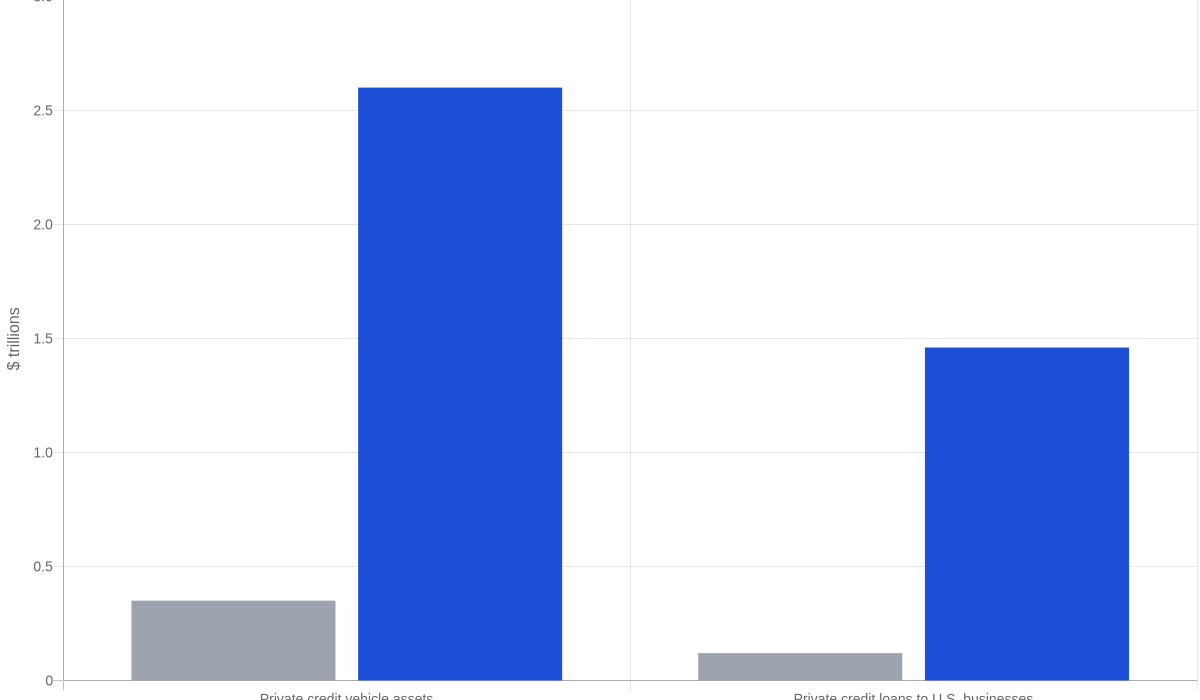
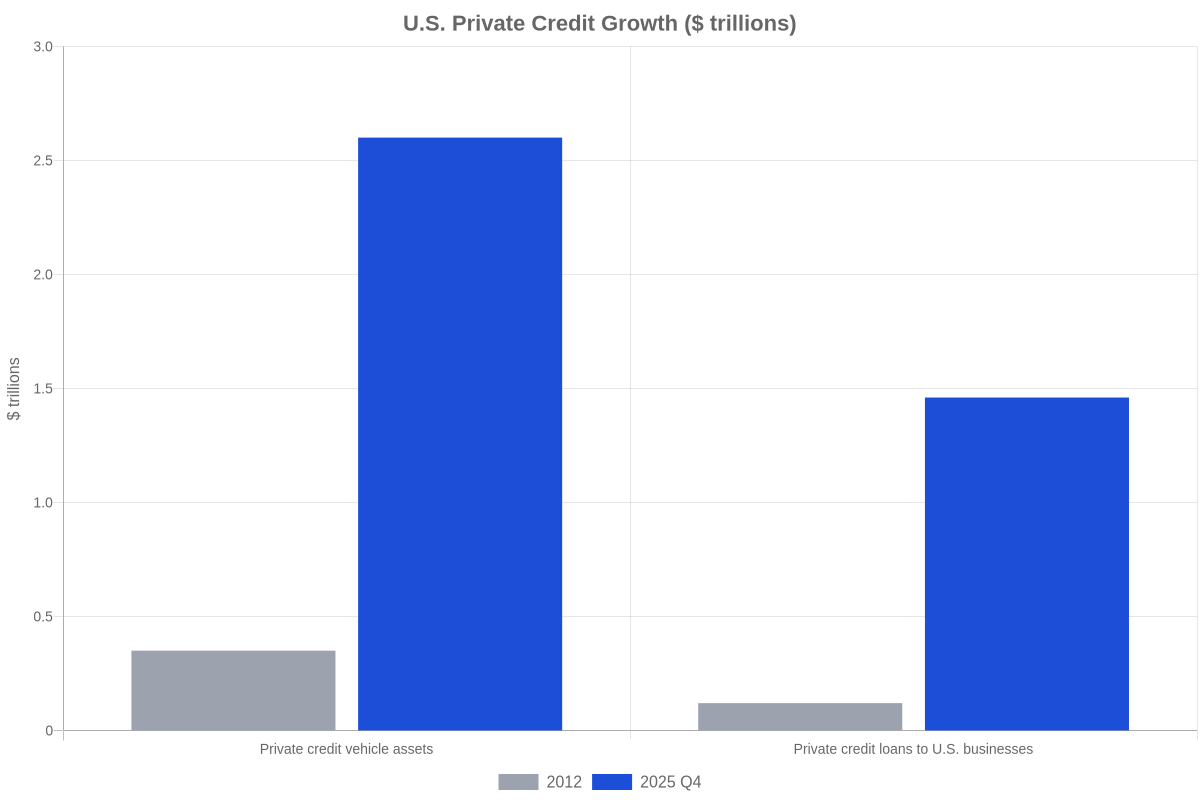
At the end of 2025, U.S.-domiciled private credit vehicles managed $1.9 trillion in assets. Total loans to U.S. businesses reached about $1.5 trillion, including $335 billion from foreign-domiciled funds. Private debt funds and business development companies each held just under half of outstanding loans.
Fed data expands private credit visibility
The integration identifies where funds originate and where credit lands. U.S. nonfinancial corporations owed about $1.1 trillion, including $622 billion to private debt funds and $341 billion through business development companies. Interval funds and middle-market collateralized loan obligations supplied smaller shares.
The change also corrects prior classifications. Some private credit liabilities appeared as miscellaneous business liabilities, while assets and funding instruments were missing or assigned to other sectors. The updated accounts now allow analysts to trace the chain from investors through private vehicles to borrowers.
What the new measurement changes
Including the U.S. private credit market raises measured nonfinancial business debt-to-GDP by around five percentage points. However, the Fed said the broader debt trend remains below its post-2012 median and has declined since 2020. The revision changes the level more than the direction.
The data improves analysis of leverage, funding concentration and household exposure through pensions or private debt funds. It complements Fusion Market News coverage of repo-market constraints, derivatives fee structures and cross-border capital flows.
The Fed also noted measurement limits. Form PF does not capture every exempt foreign adviser, and some syndicated loans may remain inside the estimates because the datasets cannot always separate them from private transactions.

Elsy kanana
Elsy Kanana is a financial and cryptocurrency journalist at FusionMarketNews, covering digital assets, blockchain technology, financial markets, and emerging fintech trends. Her reporting focuses on market movements, regulatory developments, and on-chain analytics, delivering clear, data-driven insights to readers worldwide.