The government bond safe haven weakened after 2021 as inflation pressures changed how markets reacted to economic shocks. A Federal Reserve staff note published Oct. 16 found that stocks and long-term bond prices increasingly fell together when inflation news implied tighter monetary policy.
Government bond safe haven weakens after 2021
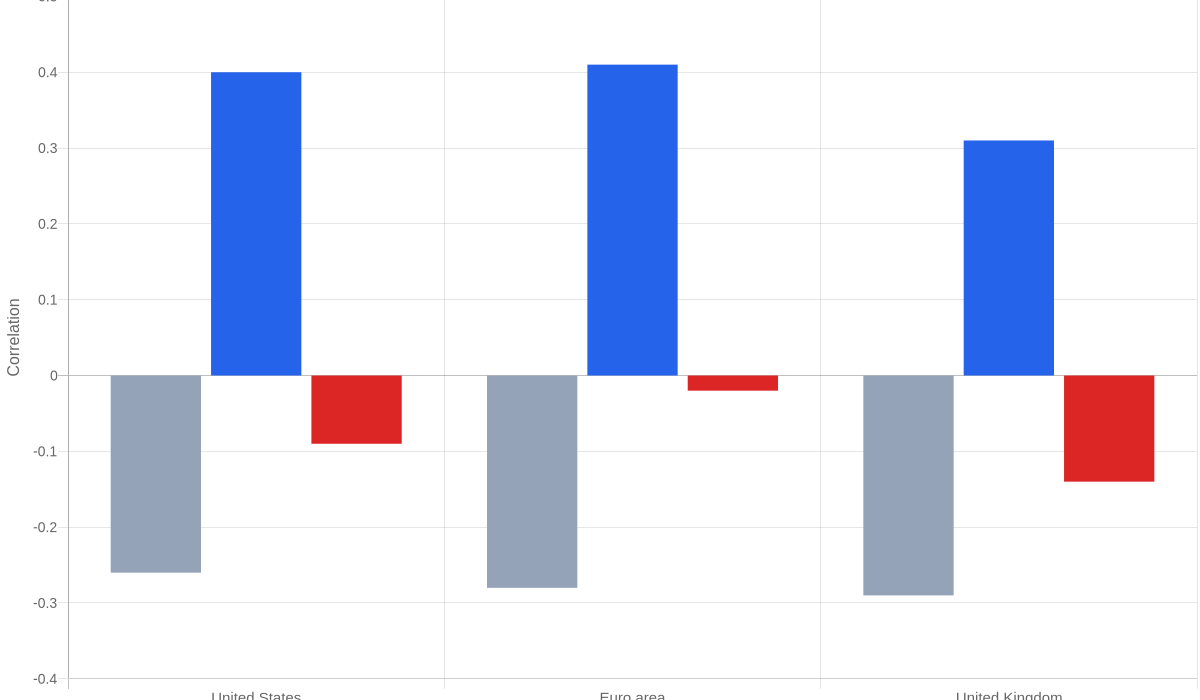
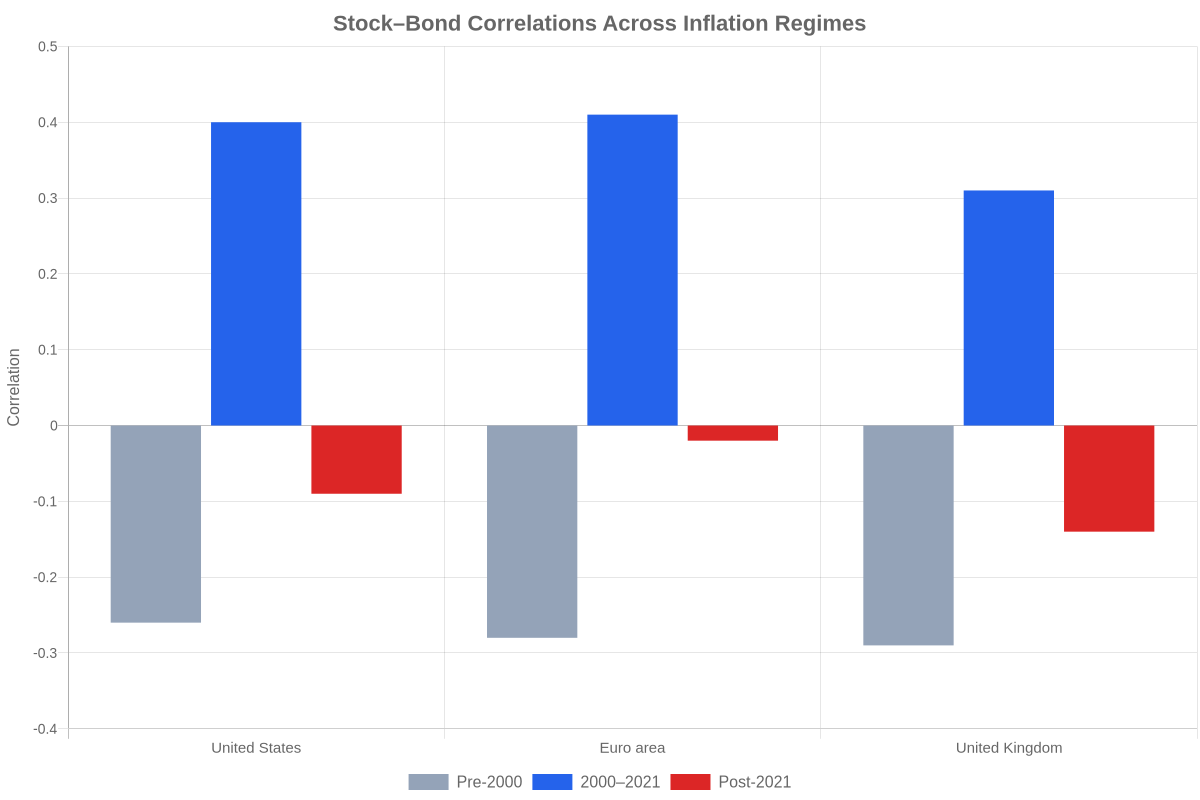
The Federal Reserve staff analysis compared stock returns with changes in 10-year government bond yields across the United States, euro area and United Kingdom. In its framework, positive correlation means stocks and yields fall together, so bond prices rise while stocks decline.
The U.S. correlation measured -0.26 before 2000, 0.40 from 2000 through 2021 and -0.09 after 2021. The euro area moved from 0.41 in the low-inflation period to -0.02 after 2021. The United Kingdom shifted from 0.31 to -0.14.
Why inflation changes bond behavior
When inflation is near target and expectations remain anchored, central banks can cut rates during growth shocks. Falling yields then support government bond prices while stocks weaken. That relationship made bonds an effective portfolio hedge during much of the 2000–2021 period.
Above-target inflation creates a different policy tradeoff. An energy or supply shock can weaken growth while raising prices, leaving policymakers less room to ease. Investors may instead price a higher interest-rate path, pushing long-term yields up as stock prices fall.
The note found that higher-than-expected U.S. inflation news raised U.S. 10-year yields about three times more after 2021 than during 2000–2019. It also produced stronger spillovers into euro-area and U.K. yields.
What investors should monitor
The findings do not mean government bonds permanently lost their defensive role. The authors said the deterioration reflected the inflation regime and mix of shocks rather than a fixed change in bond characteristics. The note represents the authors’ views, not an official policy position of the Federal Reserve Board.
Investors can track that backdrop through inflation and activity releases. Recent Fusion Market News coverage includes U.S. consumer prices, import-price pressures and industrial production. A sustained easing in inflation expectations would give central banks more flexibility and could restore part of the bond hedge.

Sharron Kendi
Sharron Kendi is a seasoned crypto market analyst and writer with over three years of experience decoding blockchain trends, price movements, and market dynamics. She holds a Bachelor’s Degree in Commerce (Finance) from Kenyatta University, blending a solid academic foundation with a sharp eye for technical analysis and a deep understanding of on-chain data. Her work delivers clear, data-driven insights that empower investors to navigate the fast-evolving digital asset space with confidence.