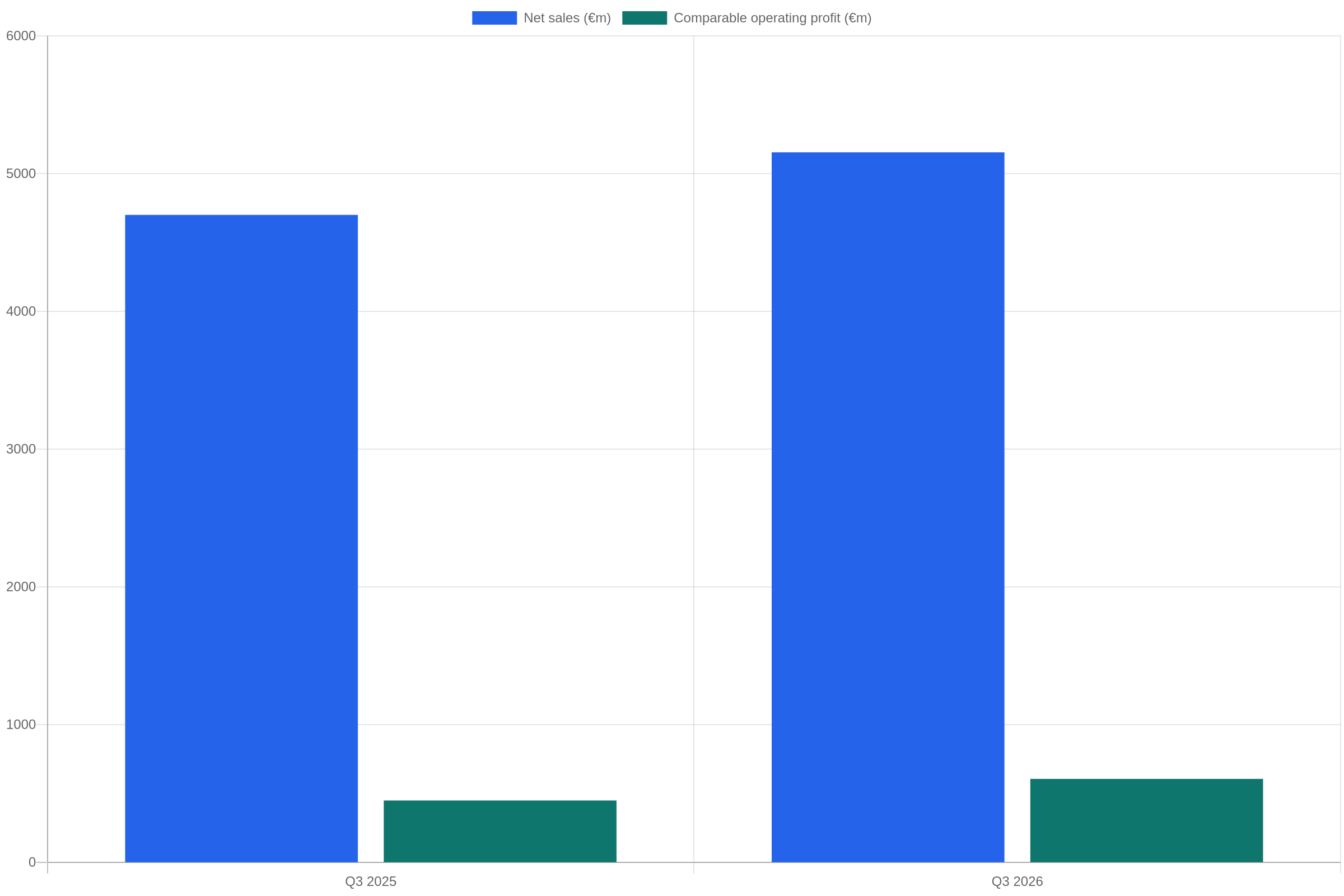
Nokia Q3 2026 earnings showed faster growth as spending on artificial-intelligence and cloud networks lifted demand for its optical and IP products. The Finnish equipment maker said October 22 that quarterly net sales reached €5.154 billion, up 10% from a year earlier and 9% on a constant-currency basis.
Nokia Q3 2026 earnings show AI infrastructure demand
Nokia’s official interim report showed Network Infrastructure sales rose 15% at constant currency. IP Networks grew 43%, while Optical Networks advanced 18%, giving the company direct exposure to data-center interconnection and the broader buildout of AI computing capacity.
Chief Executive Justin Hotard said Nokia secured €1.5 billion of new AI and cloud orders during the quarter. He also forecast 25% to 30% growth in the combined Optical and IP Networks businesses in 2027, a forward-looking target that depends on customer spending and execution. The expansion connects with the broader investment wave around AI data centers and the rising demand for high-speed networking between computing clusters.
Margins improve while restructuring weighs on reported profit
Comparable operating profit increased to €605 million from €448 million, and the comparable operating margin rose 220 basis points to 11.7%. Reported operating profit, however, fell 22% to €196 million because accelerated restructuring and integration costs reduced the reported margin to 3.8%.
Nokia expects to finish the Infinera integration by the end of 2026, one year ahead of its earlier timetable, and targets €200 million in net synergies. Management also raised planned working-capital investment by €400 million to secure supply and support expected 2027 growth, lowering its full-year free-cash-flow conversion assumption to 35%–55%.
What investors should watch next
The company now assumes Network Infrastructure sales will grow 12%–14% in 2026 on a constant-currency and portfolio basis. Its full-year comparable operating-profit range is unchanged, with management expecting a result above the midpoint, but the forecast still relies on a strong seasonal fourth quarter.
Investors will need to balance the acceleration in AI orders against restructuring cash costs, supply commitments and customer capital-spending risk. Nokia’s results add another infrastructure signal alongside Nvidia’s AI-defined manufacturing push and the growing role of AI agents in enterprise buying decisions.

Elsy kanana
Elsy Kanana is a financial and cryptocurrency journalist at FusionMarketNews, covering digital assets, blockchain technology, financial markets, and emerging fintech trends. Her reporting focuses on market movements, regulatory developments, and on-chain analytics, delivering clear, data-driven insights to readers worldwide.