Supply chain chokepoints can cause substantially more economic damage than similarly sized shocks elsewhere, according to research published by the Bank for International Settlements on October 15. The study examined how conflicts, trade restrictions and transport disruptions spread through production networks.
Why supply chain chokepoints matter
The BIS defined a chokepoint as an important product or node with few substitutes that can be activated quickly. Examples include semiconductor production, refined oil products, German machinery, Chinese electrical equipment and Middle Eastern fertilizer output.
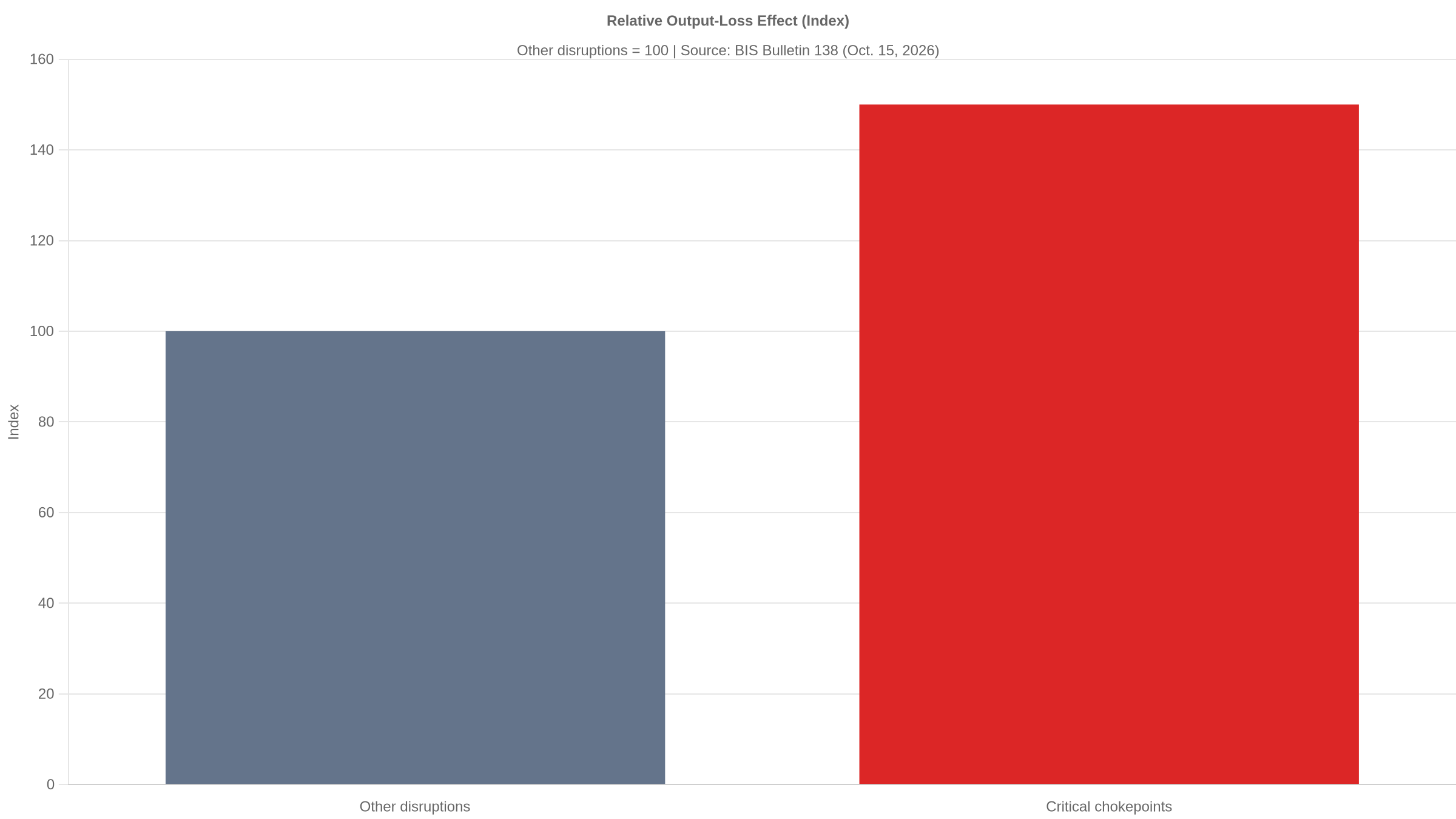
A one-standard-deviation increase in disruption at a critical country-sector node was associated with a 50% larger decline in global industrial production growth than an equal shock at a less important node. The findings add supply-network context to the latest U.S. producer-price increase.
How supply chain chokepoints raise prices
The BIS estimated that disruptions at key nodes lifted downstream producer prices by about 70 basis points within a year. Shocks at less central nodes had minimal price effects. Companies often protected output by switching suppliers or using inventories, but alternative inputs frequently cost more.
Japan’s response to Chinese rare-earth restrictions illustrated the trade-off. Japan cut China’s share of its rare-earth imports from about 80% to 45% between 2012 and 2014, but purchases from other countries were more expensive.
Electronics remain particularly exposed because they combine economic importance with limited short-term substitution. That risk also matters for semiconductor expansion plans such as GlobalFoundries’ proposed capacity investment.
What policymakers and markets watch
In a BIS simulation, a 150% global increase in trade costs for high-tech electronics produced short-run GDP losses near 1% in most countries and as much as 4% in highly exposed economies. Long-run losses averaged about 0.3% as firms found substitutes.
The authors said central banks can generally look through first-round inflation effects when expectations remain anchored. Low inventories, limited spare capacity or broad repricing could still magnify the shock. Those risks complement the consumer-price pressures described in the latest U.S. CPI report.
Source: Bank for International Settlements, Bulletin 138.

Elsy kanana
Elsy Kanana is a financial and cryptocurrency journalist at FusionMarketNews, covering digital assets, blockchain technology, financial markets, and emerging fintech trends. Her reporting focuses on market movements, regulatory developments, and on-chain analytics, delivering clear, data-driven insights to readers worldwide.