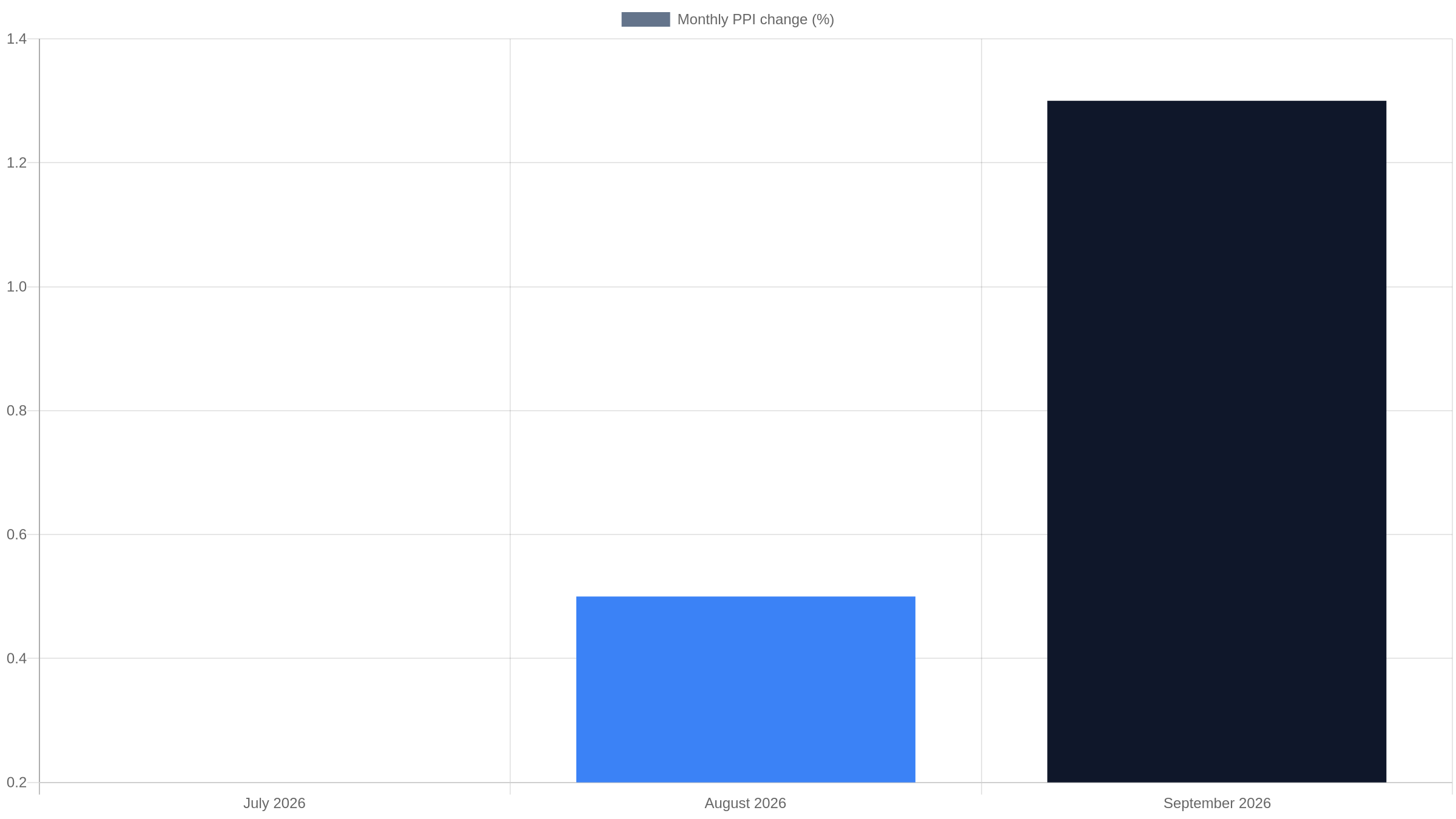
U.S. wholesale inflation accelerated sharply in September, adding a fresh cost-pressure signal for investors after the prior day’s consumer-price report. The Bureau of Labor Statistics said the Producer Price Index for final demand increased 1.3% on a seasonally adjusted basis, up from 0.5% in August and 0.2% in July.
Why the September PPI spike matters
The September increase was the strongest monthly gain since March 2022, when final-demand prices rose 1.7%. Over the 12 months through September, the headline index climbed 6.3%, its largest annual advance since December 2022.
PPI tracks prices received by domestic producers and can offer an early view of pipeline inflation. It does not translate one-for-one into consumer prices, because retail margins, imported inputs and business pricing decisions also matter. Readers can compare the release with the latest September CPI report and this CPI explainer.
Energy drives the price increase
Prices for final-demand goods advanced 2.6%, the largest increase since the series began in December 2009. More than four-fifths of that rise came from final-demand energy, which surged 10.8%. Food prices rose 1.2%, while goods excluding food and energy increased 0.3%.
Final-demand services prices increased 0.8%. The narrower measure that excludes food, energy and trade services rose 0.5% in September after a 0.3% August gain, showing that the month’s inflation pressure was broader than energy alone.
What markets watch next
The release date was October 15, while the data cover September. Investors will watch whether producers absorb higher input costs or pass them through to customers, a distinction that could affect profit margins, bond yields and interest-rate expectations.
The Federal Reserve’s latest regional survey already showed uneven consumer conditions alongside manufacturing growth. That Fed Beige Book summary provides additional context for how firms are experiencing demand and costs.
Source: U.S. Bureau of Labor Statistics, Producer Price Indexes — September 2026.

Elsy kanana
Elsy Kanana is a financial and cryptocurrency journalist at FusionMarketNews, covering digital assets, blockchain technology, financial markets, and emerging fintech trends. Her reporting focuses on market movements, regulatory developments, and on-chain analytics, delivering clear, data-driven insights to readers worldwide.