
The Fed Beige Book showed manufacturing strengthened across much of the United States, while consumer activity remained subdued. The Federal Reserve published the report on October 14, 2026, using information collected through October 5.
Fed Beige Book Shows Uneven District Growth
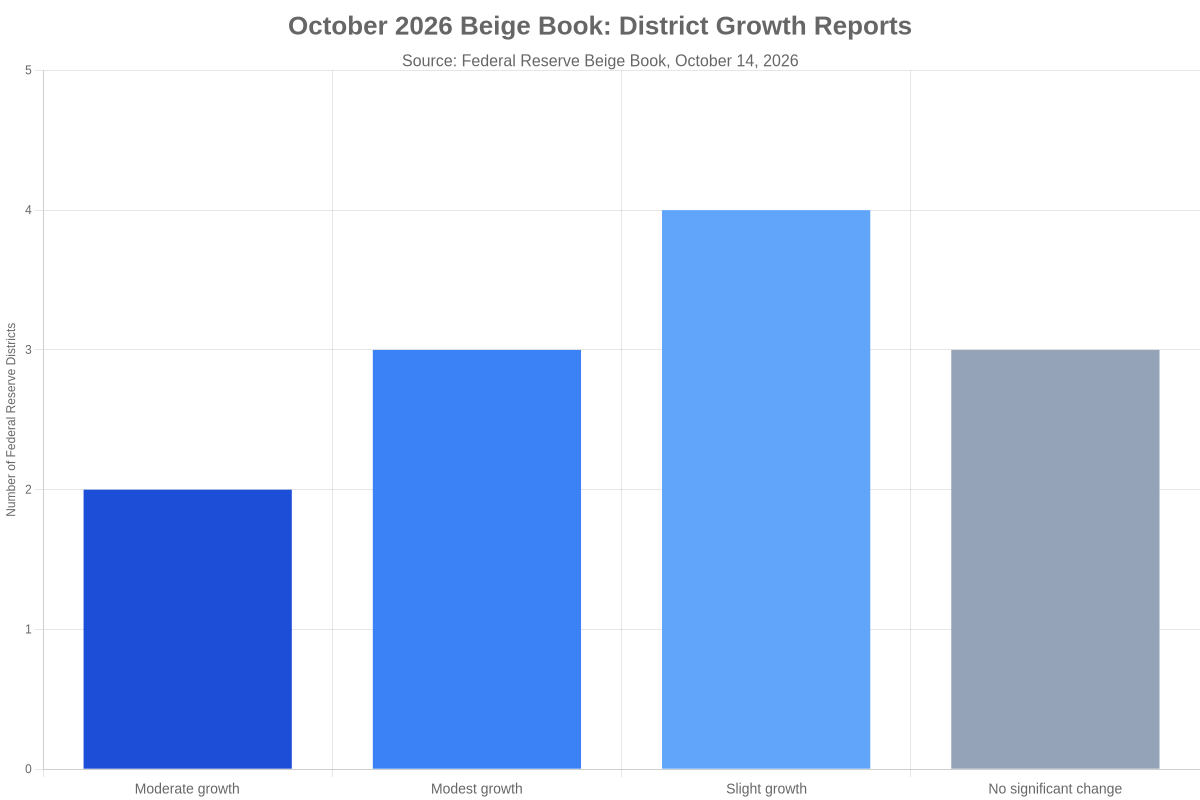
The Federal Reserve’s national summary reported growth in nine of its 12 districts. Dallas recorded moderate expansion supported by broad manufacturing gains, while three districts reported no significant change in activity.
Six other districts described modest to moderate manufacturing growth. Growth in banking and nonfinancial services eased, and most districts reported little or no change in overall consumer spending. The contrast followed September inflation data showing a 3.7% annual increase in consumer prices.
Fed Beige Book Flags Price and Consumer Pressure
Employment increased modestly, but the report described price growth as strong. Businesses continued to cite inflation, geopolitical risks and trade-policy uncertainty as constraints, even as most outlooks remained positive.
More than half of the districts said higher-income households drove consumer spending. Auto sales were flat to modestly lower in five of the six districts that discussed the sector. These signals add household-level context to broader concerns about debt, energy and global growth raised during the IMF and World Bank meetings.
What Markets Should Watch
The Beige Book does not provide a numerical forecast or represent a formal view from Federal Reserve officials. It summarizes comments from businesses and community contacts, making it a qualitative input for monetary policy discussions.
Investors will watch whether manufacturing strength spreads to services and whether strong price increases persist. They will also compare the report with upcoming production, labor and spending data before the next policy decision. The central bank’s operating backdrop includes recent regulatory changes such as the expanded 18-month bank examination cycle.

Sharron Kendi
Sharron Kendi is a seasoned crypto market analyst and writer with over three years of experience decoding blockchain trends, price movements, and market dynamics. She holds a Bachelor’s Degree in Commerce (Finance) from Kenyatta University, blending a solid academic foundation with a sharp eye for technical analysis and a deep understanding of on-chain data. Her work delivers clear, data-driven insights that empower investors to navigate the fast-evolving digital asset space with confidence.