
Key Insights
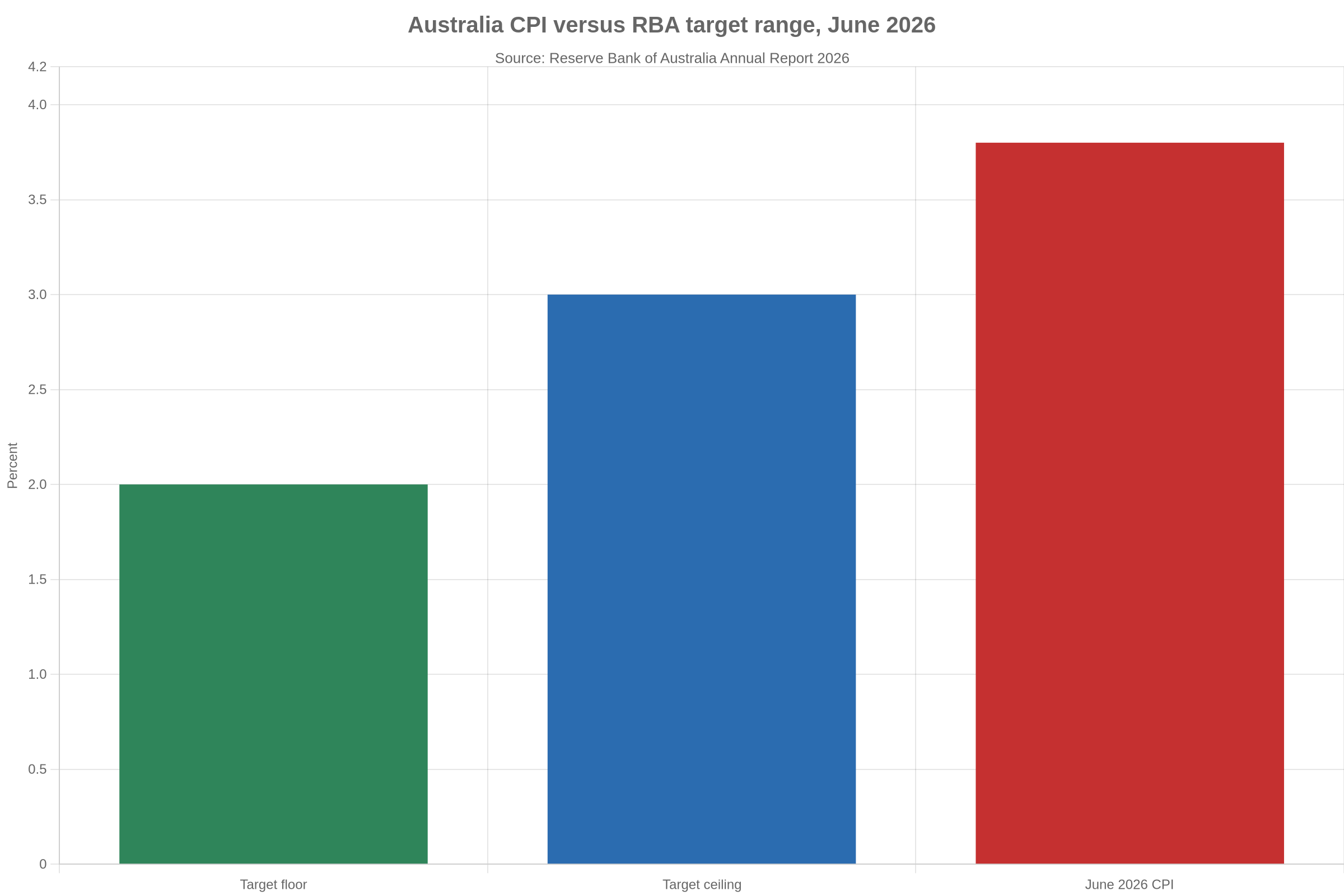
- The RBA inflation outlook says annual CPI inflation reached 3.8% in the June quarter of 2026, above the 2%–3% target range.
- The Reserve Bank of Australia expects inflation to return to the target range during the first half of 2027.
- The cash rate target rose by 75 basis points in the first half of 2026 as the central bank responded to renewed inflation pressure.
The Reserve Bank of Australia’s latest annual report puts persistent inflation at the center of the domestic market outlook. The report, released on October 15 and covering the 2025/26 financial year, says annual consumer price inflation reached 3.8% in the June quarter.
Why the RBA inflation outlook remains above target
The RBA said stronger-than-expected demand and capacity constraints contributed to renewed inflation pressure. It expects inflation to move back inside the 2%–3% target band during the first half of 2027, but the forecast leaves households and markets facing several more months of above-target price growth.
The chart below compares the June 2026 CPI rate with the RBA’s target boundaries. It uses figures from the central bank’s 2026 annual report rather than a market estimate.
Rates and labor conditions shape the path
The RBA raised its cash rate target by a cumulative 75 basis points during the first half of 2026, after cutting it by 25 basis points in August 2025. The annual report also says the cash rate stayed within a few basis points of the target on every business day, indicating that policy implementation remained orderly.
Australia’s unemployment rate was 4.4% in June, while wages grew 3.3% over the year to the March quarter of 2026. That wage pace was below its 4.3% peak in 2023, but the RBA’s assessment suggests policymakers still see limited spare capacity in parts of the economy.
What markets watch next
The key test is whether inflation slows on the RBA’s projected timetable without a sharp deterioration in employment. Bond yields and the Australian dollar may remain sensitive to incoming inflation, wages and labor-market data because each release can shift expectations for the next policy move.
For broader context, see Fusion Market News coverage of U.S. producer prices, the latest UK GDP reading and the Federal Reserve’s Beige Book. The full figures and policy discussion are in the Reserve Bank of Australia Annual Report 2026.

Sharron Kendi
Sharron Kendi is a seasoned crypto market analyst and writer with over three years of experience decoding blockchain trends, price movements, and market dynamics. She holds a Bachelor’s Degree in Commerce (Finance) from Kenyatta University, blending a solid academic foundation with a sharp eye for technical analysis and a deep understanding of on-chain data. Her work delivers clear, data-driven insights that empower investors to navigate the fast-evolving digital asset space with confidence.