

BlackRock Bitcoin ETF Bleeds $528M as BTC Slips Below $75K
3 min read
Key Takeaways
- BlackRock’s IBIT logged its second-largest daily outflow ever.
- U.S. Bitcoin ETFs recorded eight straight days of redemptions.
- Analysts warned weakening demand may pressure Bitcoin further.
BlackRock’s spot Bitcoin exchange-traded fund faced one of its worst trading sessions on record Wednesday. The iShares Bitcoin Trust lost $527.8 million in net flows as U.S. spot Bitcoin funds extended an eight-day redemption streak. The selling pressure emerged while Bitcoin traded below $75,000 during a broader crypto market correction.
Farside Investors data showed total withdrawals from U.S.-listed spot Bitcoin exchange-traded funds reached $733.4 million for the session. The latest sell-off pushed cumulative redemptions during the current streak to nearly $2.6 billion. The move reversed earlier optimism that followed strong institutional demand during the first quarter.
Bitcoin ETF Outflows Reverse 2026 Momentum
SoSoValue data showed U.S. spot Bitcoin exchange-traded funds returned to negative territory for the year. Investors withdrew nearly $596 million on a year-to-date basis after persistent selling accelerated throughout May. The month alone accounted for roughly $2.1 billion in net outflows, making it the weakest monthly performance this year.
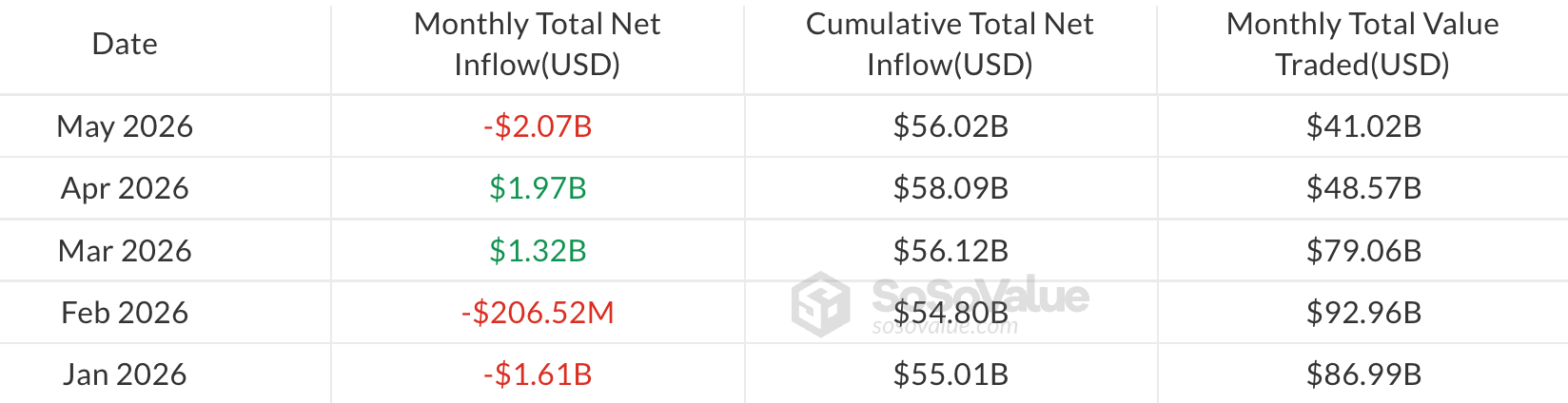
BlackRock’s withdrawal level came close to the fund’s largest daily outflow recorded on Jan. 30, 2026. Still, total market withdrawals remained below the industry’s worst trading session from Nov. 13. During that earlier session, spot Bitcoin funds lost around $866.7 million across nearly every issuer.
The reversal reflected fading institutional appetite during recent weeks. Bitcoin exchange-traded funds had previously attracted steady inflows after gaining regulatory acceptance and broader treasury adoption. That trend weakened as macroeconomic uncertainty and leveraged positioning pressured digital asset markets.
Trading activity also pointed to defensive positioning among institutional investors. Several large funds reduced exposure while volatility expanded across crypto derivatives markets. The selling intensified because many market participants expected continued inflows after earlier price recoveries.
Analysts Flag Weakening Institutional Bitcoin Demand
CryptoQuant analysts reiterated that Bitcoin may test lower support levels if demand deterioration persists. Their research pointed toward weakening spot demand and slower capital rotation into exchange-traded products. The firm identified $70,000 as the next major support zone during the current correction cycle.

10x Research analysts linked much of Bitcoin’s institutional demand to Strategy, the largest public corporate Bitcoin holder. Their report argued the company could face pressure from future dividend obligations tied to preferred stock financing. That situation raised concerns about whether Strategy would maintain aggressive Bitcoin accumulation.
The discussion intensified after Strategy co-founder Michael Saylor addressed long-term treasury management during a public appearance in mid-May. Saylor suggested rigid adherence to a “never sell” approach may eventually conflict with shareholder interests. His comments sparked broader debate regarding the sustainability of corporate Bitcoin treasury strategies.
Market participants also monitored derivatives activity for signs of further weakness. Open interest declined across several major exchanges as traders reduced leverage exposure. That reaction mirrored previous correction periods where institutional demand slowed alongside weaker spot inflows.
Institutional Buyers Reassess Bitcoin Exposure
The latest outflows reflected broader caution among institutional allocators. Many funds entered Bitcoin exchange-traded products after expectations of looser monetary conditions strengthened earlier this year. Those expectations weakened after inflation concerns resurfaced across financial markets.
Corporate treasury buyers also appeared more selective during recent sessions. Several firms paused aggressive accumulation strategies while market volatility expanded. The slowdown reduced one of the strongest demand drivers supporting Bitcoin throughout the past year.
BlackRock’s exchange-traded product remained the largest spot Bitcoin fund despite recent withdrawals. The fund attracted substantial inflows after launch because institutional investors preferred regulated market exposure. However, the latest redemption cycle suggested some investors shifted toward lower-risk positions during the downturn.
Broader crypto sentiment weakened alongside the exchange-traded fund sell-off. Altcoins posted steeper declines as Bitcoin lost momentum and liquidity conditions tightened. That pattern reinforced Bitcoin’s role as the sector’s primary institutional benchmark asset.
Traders now watched whether redemption pressure would continue into next week’s sessions. Sustained outflows may increase downside pressure across both spot and derivatives markets. Analysts also monitored macroeconomic data releases that could shape institutional allocation decisions during coming weeks.