
U.S. Seized FTX Wallet Moves Chainlink to Coinbase Prime
3 min read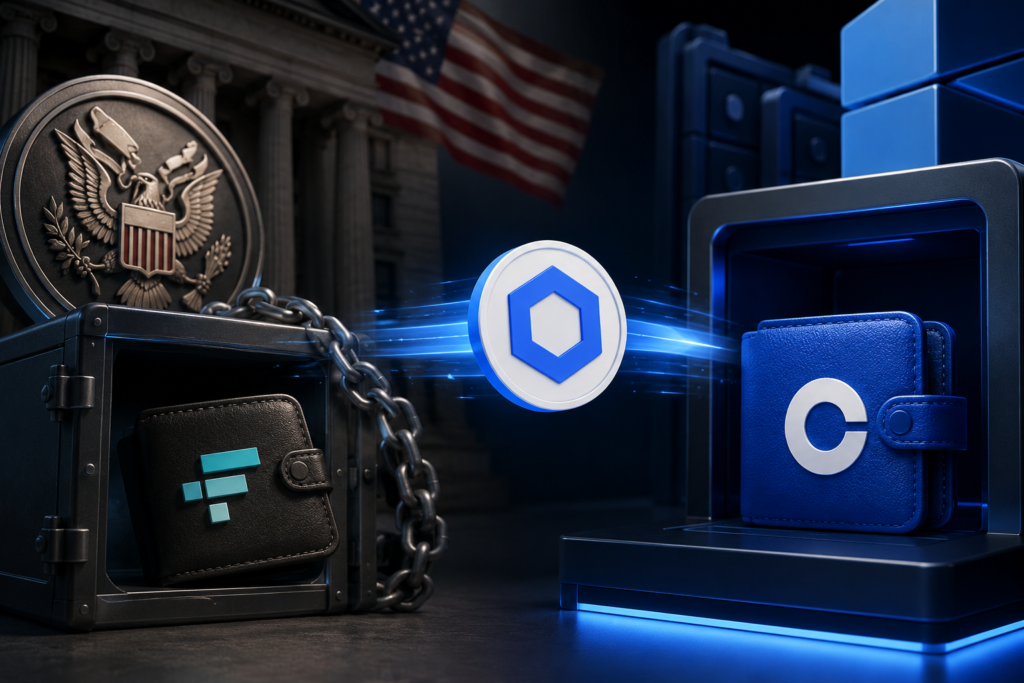
- U.S. seized FTX-linked wallet moved 98,590 LINK to Coinbase Prime, drawing trader attention.
- The $768K Chainlink transfer remains small compared with LINK’s wider daily market volume.
- Coinbase Prime deposit raised questions over custody, asset management, or possible future liquidation.
A wallet identified by blockchain tracker LookOnChain as holding seized FTX and Alameda-linked funds reportedly deposited 98,590 Chainlink tokens into Coinbase Prime. The transfer was valued at about $768,000 at the time it was flagged, placing the movement under close watch from crypto market participants.
The wallet activity drew attention because the route appeared to involve assets connected to FTX and Alameda, then a government-controlled wallet, and later Coinbase Prime. While the transfer does not confirm that a sale has taken place, deposits to institutional exchange infrastructure are often monitored by traders as possible preparation for custody, liquidation, or asset management.
Coinbase Prime is widely used by institutions, asset managers, and public entities for custody and trading services. In this case, the platform’s involvement has prompted discussion about how seized digital assets may be handled when authorities move funds from on-chain wallets to regulated service providers.
Transfer Size Remains Limited Against Chainlink Market Volume
The reported $768,000 Chainlink movement is relatively small when compared with broader LINK market activity. Market commentators noted that Chainlink has recently recorded hundreds of millions of dollars in daily trading volume, which means the transfer alone would not represent a large supply event in normal market conditions.
Even with the limited size, government-linked wallet movements often attract attention because they can create uncertainty before any official statement or transaction outcome becomes clear. Traders tend to monitor these transfers closely because deposits to exchange venues may be interpreted as a possible step before a sale.
A transfer to Coinbase Prime, however, does not automatically mean that LINK will be sold on the open market. The assets may be moved for custody, internal accounting, compliance handling, auction preparation, or another administrative process connected with seized digital asset management.
Market Focus Turns to Seized Crypto Liquidation Rails
The movement has renewed discussion about how U.S. authorities manage crypto assets obtained through forfeiture or enforcement actions. After major industry failures such as FTX, seized funds can remain visible on public blockchains, allowing analysts and traders to track transfers in real time.
Some market observers described the transfer as part of an emerging state liquidation process for digital assets, with Coinbase Prime positioned as a key institutional channel. That view reflects the growing role of regulated crypto platforms in handling government-connected funds.
For Chainlink traders, the immediate question is whether the transfer adds near-term selling pressure or remains an administrative movement. Analysts also pointed out that LINK’s broader price direction is more likely to be shaped by larger market drivers, including institutional blockchain adoption, oracle demand, and financial market integrations, rather than a single transfer below $1 million.
LINK Traders Watch Price Levels After Wallet Movement
The LINK market reaction appeared measured, with traders focusing on whether support near the mid-$7 range would continue to hold. A limited reaction would suggest that the market had already absorbed the reported transfer without treating it as a major supply shock.
Government wallet activity can still influence sentiment because seized assets are generally viewed as non-strategic holdings that may eventually be converted into cash. That view can lead traders to price in potential selling before any confirmed liquidation occurs.
The reported transfer remains important mainly because it shows how seized crypto assets can move through institutional exchange infrastructure. Unless further transfers or confirmed sales follow, the Chainlink market is likely to continue taking direction from liquidity, broader crypto conditions, and project-specific developments.