
Bitget Launches New Crypto Payment System Focused on Daily Spending
3 min read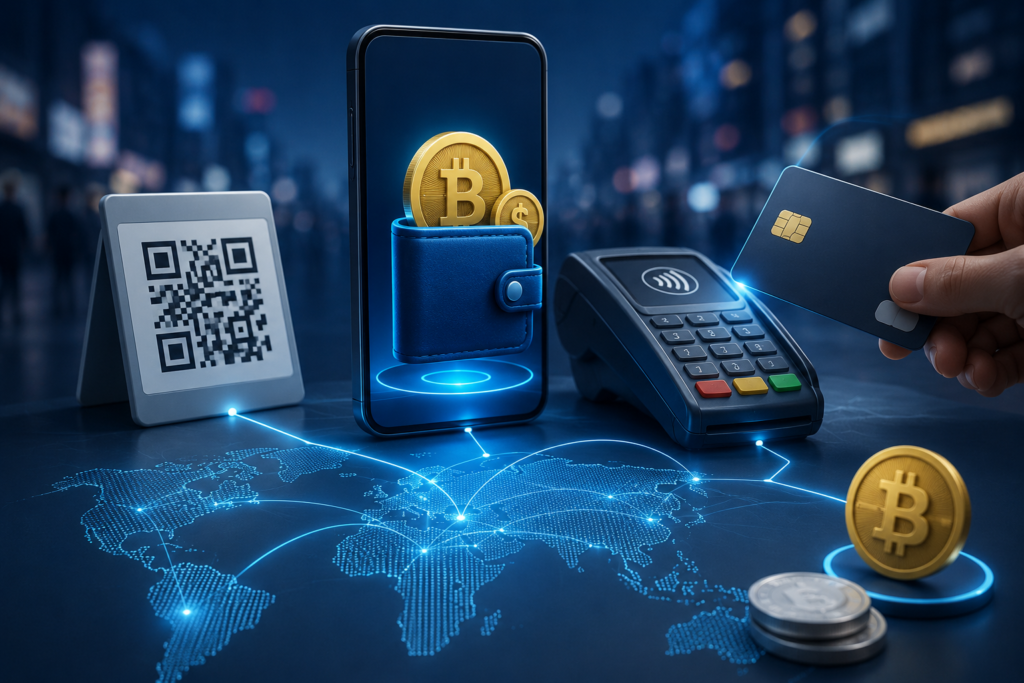
KEY INSIGHTS:
- Bitget Wallet launched PayFi Odyssey to expand stablecoin payments in emerging markets globally.
- Stablecoin transfers reached $35 trillion, but global payment usage remained limited in 2025.
- Bitget launched Reality to offer fully tokenized U.S. stocks and ETFs backed by real shares.
Bitget Wallet is expanding its push into everyday crypto payments as stablecoin activity grows across emerging markets. The company launched PayFi Odyssey with Stellar to support QR payments, crypto cards, and onchain transfers across Asia, Africa, and Latin America.
Bitget Wallet joined that trend through a new partnership with Stellar. The company launched “PayFi Odyssey” to expand crypto payment usage across Asia, Africa, and Latin America.
The rollout focuses on crypto cards, QR code payments, and onchain transfers for everyday transactions. The project also arrives as Bitget deepens its presence in tokenized financial products through its new real-world asset platform, Reality.
Bitget Wallet Targets Everyday Stablecoin Payments
In a blog post on Tuesday, Bitget announced PayFi Odyssey, in partnership with Stellar, to increase crypto payment activity in emerging markets.
The initiative focuses on daily payments rather than trading activity. The company said users still rely heavily on stablecoins for large transfers and speculative trading.
Bitget Wallet stated that PayFi Odyssey will launch in stages through July. The project includes a $300,000 rewards program tied to user activity. Participants can receive incentives through crypto card purchases, QR code payments, and onchain fund transfers.
The company also plans to introduce a “Crypto Survival Plan” campaign. The campaign will show how users across different regions spend, transfer, and manage crypto assets in real-life situations.
Bitget Wallet linked the expansion to its previous Stellar integration. The company said the project also supports its broader “Onchain Payments Matrix.” According to Bitget Wallet, the system connects blockchains, banks, and payment networks into a single stablecoin payment system.
Stablecoin Payment Use Remains Limited
Bitget Wallet shared industry figures showing a large difference between stablecoin transaction volume and payment activity. According to the company, stablecoin transaction volume reached nearly $35 trillion during 2025.
However, only about $390 billion is connected directly to payments for goods, services, and transfers. That figure represented roughly 1% of total stablecoin activity during the year.
The company said trading activity and large transfers still dominate stablecoin usage globally. At the same time, Bitget Wallet reported growing demand for mobile payments and peer-to-peer transfers across emerging economies.
The company specifically identified Asia, Africa, and Latin America as regions experiencing faster, real-world growth in stablecoin payments. Bitget Wallet tied that growth to increased adoption of mobile-focused financial tools and blockchain transfers.
Bitget Expands Into Tokenized Financial Assets
Separately, Bitget launched a tokenization platform called Reality. The company said the platform will focus initially on tokenized U.S. stocks and exchange-traded funds.
Reality will issue blockchain-based “rTokens,” representing publicly traded equities and ETFs. Bitget stated that each rToken is backed 1:1 by real shares held by a FINRA-registered, SIPC-protected U.S. broker-dealer.
The company also plans to integrate Reality into Bitget’s wider trading infrastructure. According to Bitget, users will access tokenized equities through a unified trading environment.
Bitget stated that Reality addresses market restrictions tied to geography, trading hours, fragmented platforms, and settlement limitations.
The company added that users could use tokenized equities as a unified account margin to improve capital efficiency.
Gracy Chen said the platform aligns with Bitget’s “10% vision” for tokenized financial assets by 2030. Chen stated that stablecoins, faster blockchain settlement, and exchange participation continue to drive tokenized assets toward broader use in financial infrastructure.