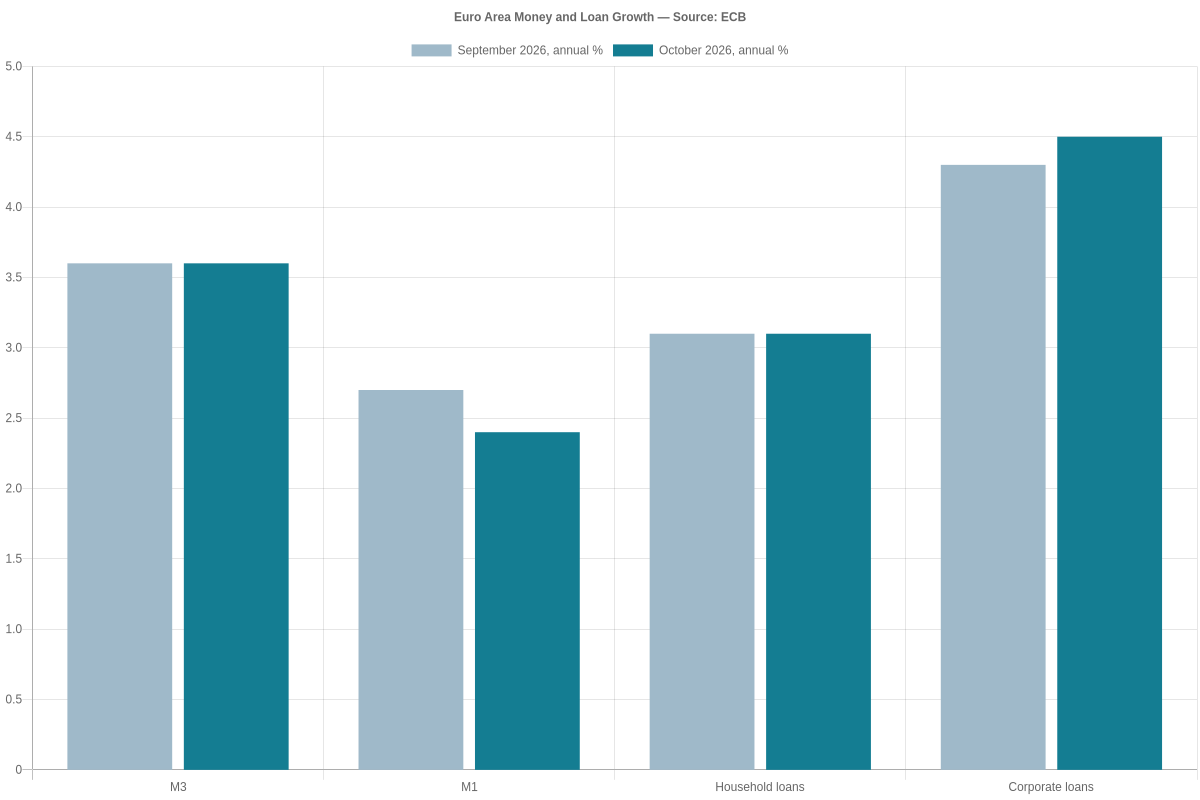
Euro area broad money growth held at 3.6% year over year in October 2026, according to the European Central Bank’s monetary developments release. The ECB published the data on November 26, one month after the measurement period.
Key Insights
- Euro area M3 growth held at 3.6%.
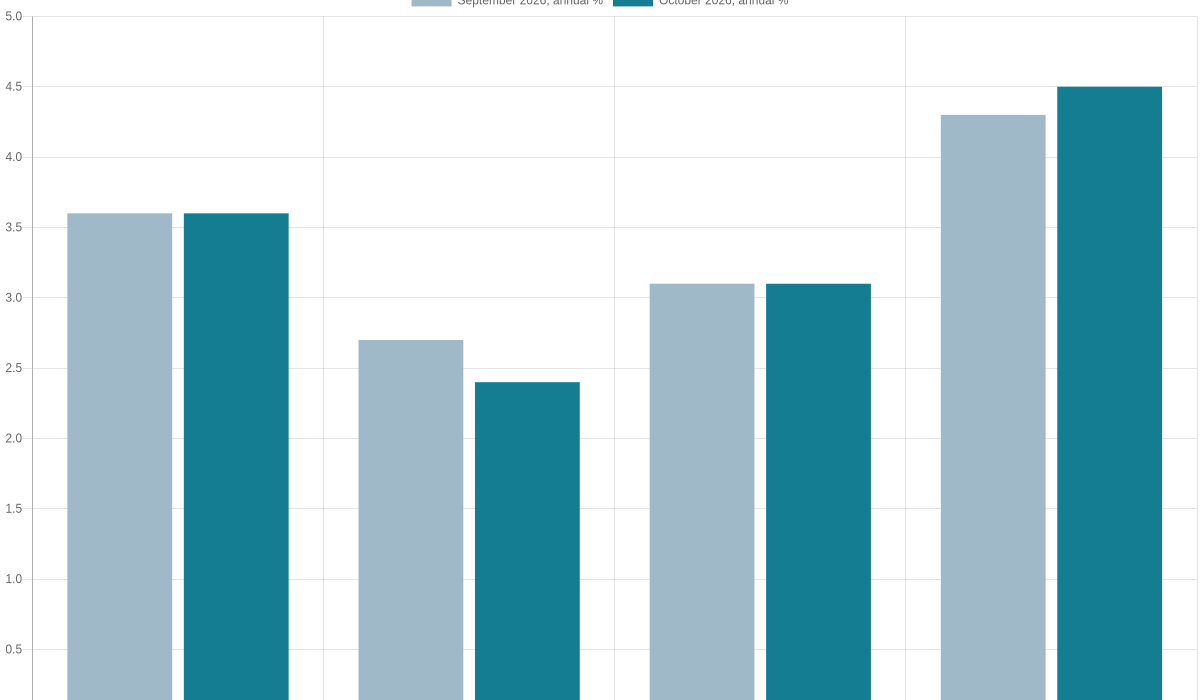
- Corporate loan growth accelerated to 4.5%.
- M1 growth slowed to 2.4% from 2.7%.
Euro area M3 growth remains steady
The annual growth rate of M3 was unchanged from September and averaged 3.6% over the three months through October. The stock of M3 reached €17.764 trillion at month-end after a seasonally adjusted monthly flow of €35 billion.
Growth in marketable instruments accelerated to 9.8% from 7.3%, while short-term deposits other than overnight deposits edged up to 4.7% from 4.6%. Those gains offset slower growth in the narrower M1 measure.
Corporate lending outpaces household loans
Adjusted loans to non-financial corporations grew 4.5% from a year earlier, up from a revised 4.3% in September. Household loan growth was unchanged at 3.1%, while adjusted lending to the private sector eased to 4.3% from 4.4%.
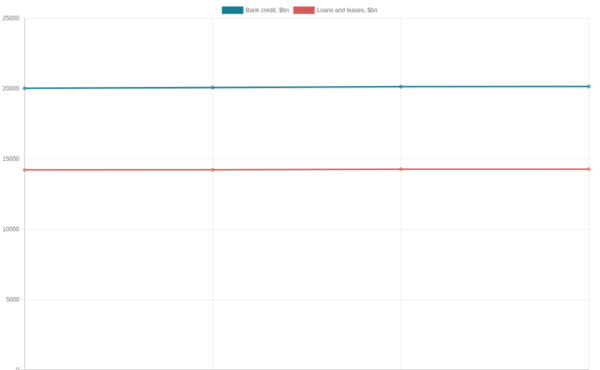
The corporate acceleration contrasts with softer deposit growth: household deposits slowed to 2.2% and corporate deposits to 4.8%. The figures offer a euro-area comparison with the latest rise in U.S. commercial bank credit.
What the mix means for monetary conditions
Stable broad money growth alongside stronger corporate lending suggests credit continued expanding without an equivalent acceleration in liquid transaction balances. M1 growth fell to 2.4%, while its contribution to M3 growth declined to 1.6 percentage points.
Investors can compare that mix with the recent rise in euro-area consumer inflation expectations and the decline in global real house prices. Future ECB releases will show whether stronger corporate borrowing persists as narrower money growth cools.

Sharron Kendi
Sharron Kendi is a seasoned crypto market analyst and writer with over three years of experience decoding blockchain trends, price movements, and market dynamics. She holds a Bachelor’s Degree in Commerce (Finance) from Kenyatta University, blending a solid academic foundation with a sharp eye for technical analysis and a deep understanding of on-chain data. Her work delivers clear, data-driven insights that empower investors to navigate the fast-evolving digital asset space with confidence.