Global real house prices fell 1.7% year over year in the second quarter of 2026, the steepest decline since the third quarter of 2023, according to the Bank for International Settlements. The data cover April through June, while the BIS published the release on November 26.
Key Insights
- Global real house prices fell 1.7% year over year.
- China and Canada recorded the largest declines at 7%.
- Portugal led annual gains with a 13% increase.
Global real house prices record four years of declines
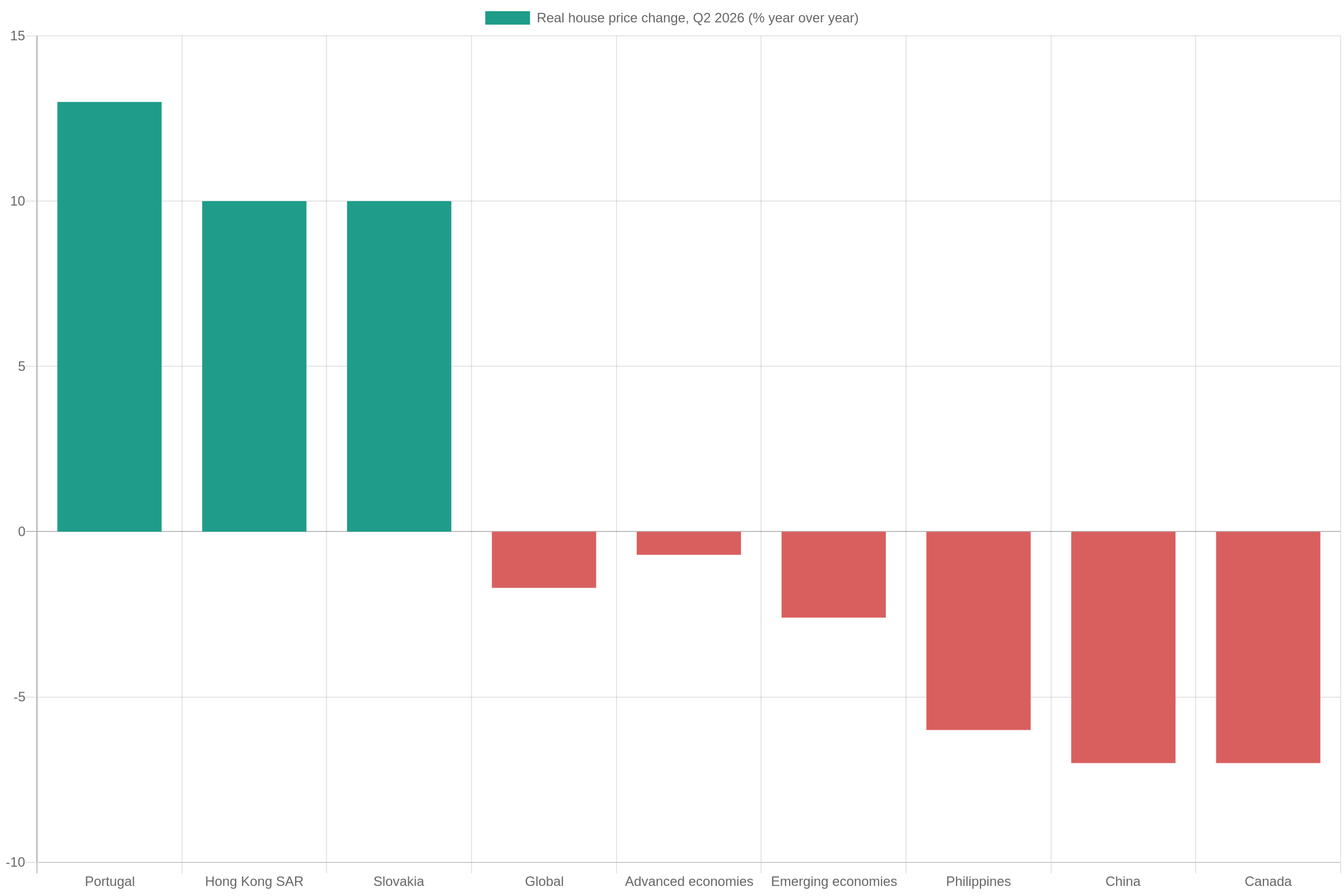
The global measure has now declined for four consecutive years after adjusting nominal home prices for consumer inflation. Advanced economies fell 0.7% from a year earlier, while emerging market economies dropped 2.6%.
Nominal residential prices still rose 1.8% globally, showing how inflation changed the real purchasing-power result. The BIS calculates its global and regional figures as weighted quarterly averages using rolling GDP and purchasing-power-parity exchange rates.
China and Canada lead the largest falls
Real prices declined 7% in both China and Canada and 6% in the Philippines. By contrast, Portugal gained 13%, while Hong Kong SAR and Slovakia each rose 10%.
The United States recorded a 3% decline, the United Kingdom was unchanged and Australia rose 4%. Those cross-market differences give investors another reference point alongside euro-area inflation expectations and the latest U.S. consumer-credit disclosure threshold.
Why the global average and median diverge
The median jurisdiction posted a 1.3% real increase, even though the GDP- and PPP-weighted global average declined. Prices rose in about 70% of reporting advanced economies and 60% of reporting emerging economies, but large negative readings in heavily weighted markets pulled the aggregate lower.
The result means breadth and size pointed in different directions during the quarter. A similar concentration effect can matter in cross-border finance, as the BIS has also highlighted in its analysis of non-bank financial intermediary lending.

Sharron Kendi
Sharron Kendi is a seasoned crypto market analyst and writer with over three years of experience decoding blockchain trends, price movements, and market dynamics. She holds a Bachelor’s Degree in Commerce (Finance) from Kenyatta University, blending a solid academic foundation with a sharp eye for technical analysis and a deep understanding of on-chain data. Her work delivers clear, data-driven insights that empower investors to navigate the fast-evolving digital asset space with confidence.