Key Insights
- PG&E Q3 2026 earnings showed core profit falling 19% year over year to $928 million.
- The utility maintained 2026 core EPS guidance of $1.64 to $1.66 and its 2027 range of $1.78 to $1.82.
- Lower regulated returns, prior-year tax effects and wildfire-related expenses weighed on quarterly results.
PG&E Q3 2026 earnings declined from a year earlier, but the California utility kept its full-year outlook unchanged. The company reported results on October 22 for the quarter ended September 30.
Income available for common shareholders fell to $749 million from $823 million. Diluted GAAP earnings per share slipped to $0.34 from $0.37, according to the company’s official release.
PG&E Q3 2026 Earnings Show Core Profit Pressure
Non-GAAP core earnings fell to $928 million, or $0.41 per diluted share. PG&E reported $1.142 billion, or $0.50 per share, in the third quarter of 2025.
Management cited a lower California Public Utilities Commission return on equity, prior-year tax methodology effects and higher Wildfire Fund expense. Increased customer capital investment and lower operating and maintenance costs partly offset those pressures.
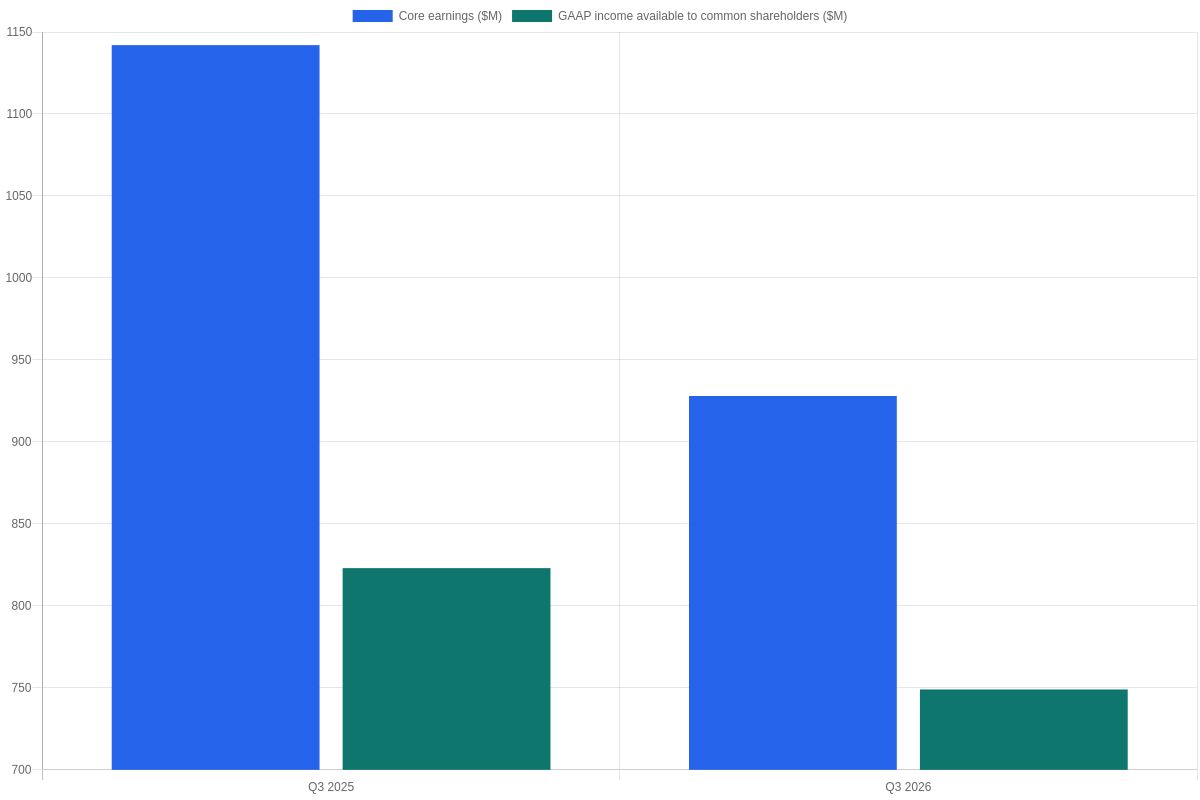
The chart separates non-GAAP core earnings from GAAP income available to common shareholders. Investors comparing utility results can also review how NextEra Energy’s earnings and backlog reflected a different growth mix.
Guidance Holds as PG&E Trims Costs
PG&E reaffirmed 2026 non-GAAP core EPS guidance of $1.64 to $1.66. It also maintained a 2027 range of $1.78 to $1.82 and said it remains on track for a 2% to 4% reduction in non-fuel operating and maintenance costs.
The company is implementing a previously announced $2 billion reduction to its 2027 capital plan. That adjustment matters because capital expenditure can support rate-base growth while also increasing financing needs.
Grid Investment and Wildfire Risk Remain Central
The utility filed a 5,000-mile undergrounding plan that it said could reduce wildfire risk by 98% on lines moved underground. PG&E also connected more than 4,240 electric customers and 3,000 electric-vehicle charging ports during the quarter.
For investors, the central tension is stable guidance against weaker quarterly profit and continuing infrastructure demands. Cash generation will remain important, making this free cash flow explainer relevant when future filings provide updated cash-flow detail.

Elsy kanana
Elsy Kanana is a financial and cryptocurrency journalist at FusionMarketNews, covering digital assets, blockchain technology, financial markets, and emerging fintech trends. Her reporting focuses on market movements, regulatory developments, and on-chain analytics, delivering clear, data-driven insights to readers worldwide.