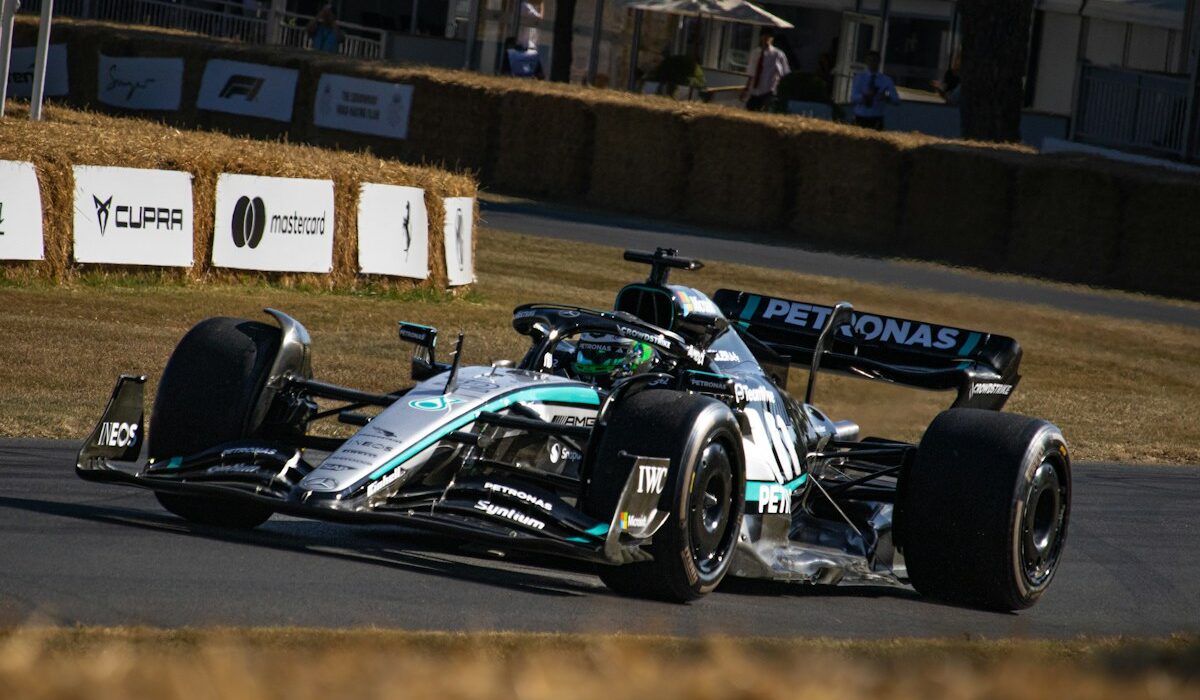
Mercedes F1 AI strategy now uses Microsoft Azure to run race simulations in seconds, giving strategists more time to test tire, weather and pit-stop scenarios while an event is unfolding.
Mercedes F1 AI strategy moves simulations trackside
Microsoft’s October 16 case study described how the Mercedes-AMG PETRONAS Formula One team uses Azure Batch to run thousands of race simulations simultaneously. Each simulation models a full race, including laps, pit stops and overtakes. The team can increase computing capacity during a race and return results while strategic options remain open.
Mercedes lead race strategist Joey McMillan said the same work once ran on Saturday night and could take an hour or longer. Azure Batch now returns comparable simulations in seconds, according to the team. That speed matters because strategists continually update models with rival pace, tire degradation, weather radar and live telemetry.
The case study illustrates the operational side of the Microsoft cloud and AI investment thesis. Investors often focus on Azure revenue growth and capital spending. The Mercedes deployment shows how customers can use on-demand compute for narrow, time-sensitive decisions rather than running permanent capacity at peak scale.
AI assists decisions but does not make the final call
McMillan said coding tools let him build models and analysis faster even though he is a mathematician and strategist rather than a software engineer. Machine learning expands the number of scenarios his team can test. However, the final choice still combines model output, communication and experience under pressure.
That division of labor matters for the commercial AI market. Faster inference alone does not guarantee useful outcomes; customers also need reliable data, a defined decision process and people who can act on results. Microsoft’s separate work on wafer-scale AI inference addresses hardware speed, while the Mercedes example shows how low-latency compute fits an operating workflow.
The Miami Grand Prix example took place on May 3, 2026, more than five months before Microsoft published its feature. Mercedes used live weather and race data when it chose an undercut for Kimi Antonelli on lap 27. The team’s account says the strategy helped Antonelli take the lead and win, but it does not isolate how much of that result came from Azure, the model or human judgment.
What the deployment means for Microsoft and enterprise AI
The Formula One deployment is a case study, not a financial disclosure. Microsoft did not provide contract value, Azure consumption or margin data. It therefore cannot establish a material earnings contribution from the Mercedes partnership by itself.
Still, it demonstrates three enterprise-AI requirements: elastic compute, rapid scenario analysis and human oversight. Those requirements are relevant beyond racing in logistics, energy trading, manufacturing and other operations where conditions change quickly. They also support the wider concern described in the BIS analysis of AI demand bottlenecks: technical capability produces economic value only when organizations redesign decisions around it.
Investors should watch whether Microsoft discloses more customer workloads that move from occasional analysis to real-time production. The strongest signal would be sustained Azure usage with measurable customer outcomes, not a single high-profile deployment. For Mercedes, the immediate test is whether faster simulations keep improving decisions across different circuits and weather conditions.

Sharron Kendi
Sharron Kendi is a seasoned crypto market analyst and writer with over three years of experience decoding blockchain trends, price movements, and market dynamics. She holds a Bachelor’s Degree in Commerce (Finance) from Kenyatta University, blending a solid academic foundation with a sharp eye for technical analysis and a deep understanding of on-chain data. Her work delivers clear, data-driven insights that empower investors to navigate the fast-evolving digital asset space with confidence.