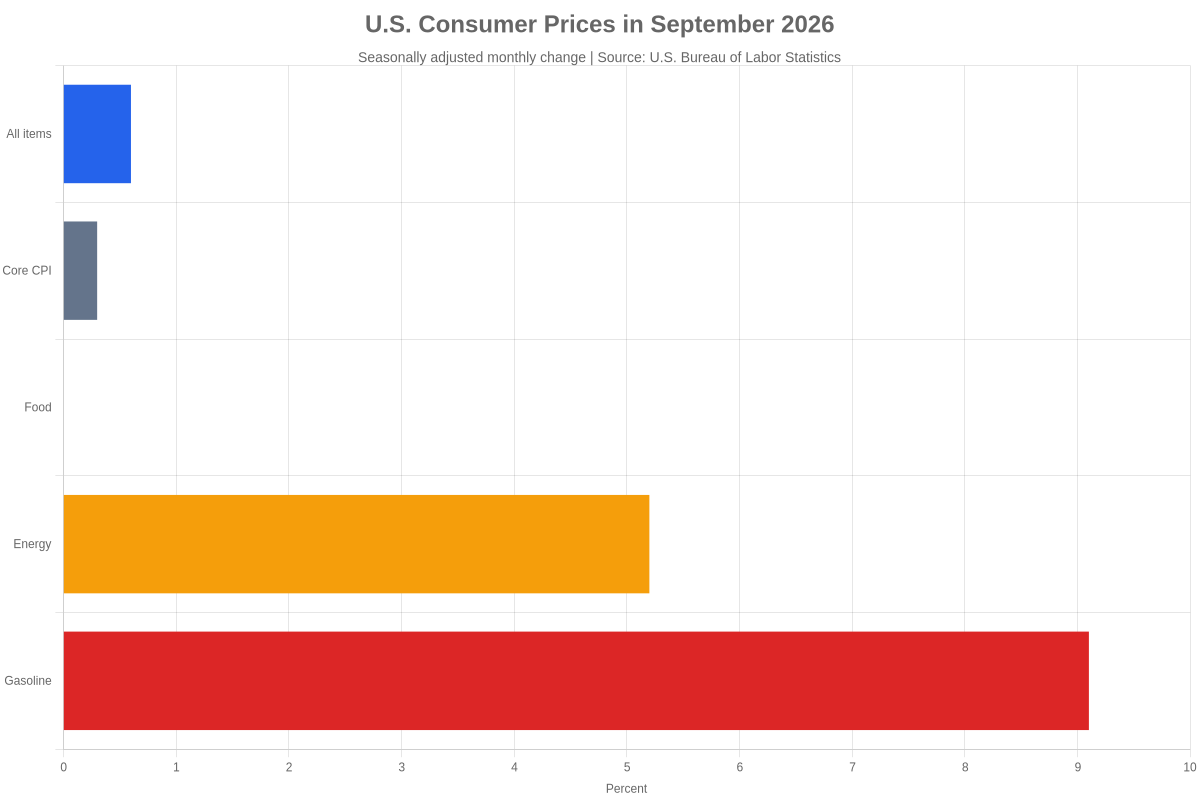
U.S. CPI accelerated in September as gasoline and broader energy costs lifted consumer prices. The Bureau of Labor Statistics said on October 14 that the Consumer Price Index rose 0.6% from August and 3.7% from a year earlier.
The monthly increase followed a 0.4% gain in August. Gasoline rose 9.1% and accounted for more than half of the overall increase, making energy the clearest driver of the latest inflation reading.
U.S. CPI Accelerates on Energy Costs
The all-items annual rate increased from 3.4% in August to 3.7% in September. Energy prices rose 20.4% over 12 months, while gasoline was 34.2% higher. Fuel oil recorded an even larger 74.2% annual increase, although it carries a much smaller weight in the consumer basket.
Food prices were unchanged during September. Food at home declined 0.1%, while food away from home increased 0.2%. That split helped keep food from adding materially to the 0.6% headline increase. Energy-market context is available in the IEA oil-stock release analysis.
Core U.S. CPI Holds at 0.3%
U.S. CPI excluding food and energy increased 0.3% in September, matching August. The core index rose 2.6% from a year earlier, up from 2.4% in August. Shelter gained 0.4% during the month and 3.2% over 12 months, keeping housing costs relevant to the underlying inflation trend.
Several service and discretionary categories also increased. Airline fares rose 1.2%, used cars and trucks gained 0.7%, recreation increased 0.5% and medical care advanced 0.1%. Prescription-drug prices fell 1.2%, while communication prices declined 0.2%.
What U.S. CPI Means for Markets
The September report shows that headline inflation can move sharply when energy prices change, even when core inflation is steadier. Investors will weigh the data against labor-market conditions and central-bank guidance rather than treating one volatile component as a complete signal.
The next U.S. CPI release, covering October, is scheduled for November 10. Until then, energy prices and shelter costs remain important inputs for rate expectations. Readers can compare the U.S. picture with the Reserve Bank of Australia’s inflation outlook and the ECB research on funding conditions.
Source: U.S. Bureau of Labor Statistics Consumer Price Index release, published October 14, 2026, for September data.

Elsy kanana
Elsy Kanana is a financial and cryptocurrency journalist at FusionMarketNews, covering digital assets, blockchain technology, financial markets, and emerging fintech trends. Her reporting focuses on market movements, regulatory developments, and on-chain analytics, delivering clear, data-driven insights to readers worldwide.