
The gold price outlook entered the fourth quarter with an unusual split between price action and investor flows. Gold fell more than 8% in September even as global gold ETFs added more than 70 tonnes, according to the World Gold Council.
COMEX gold traded near $4,166.50 late on October 5, little changed on the session. The muted rebound leaves the market dependent on real yields, the dollar and whether ETF demand continues after September’s decline.
Key Insights
- The gold price outlook remains conflicted after an 8%-plus monthly drop occurred alongside more than 70 tonnes of ETF inflows.
- The World Gold Council ranked September’s price decline in the 93rd historical percentile and ETF inflows in the 77th percentile.
- The October 27–28 Federal Reserve meeting is the clearest next macro catalyst for yields, the dollar and bullion demand.
Why the Gold Price Outlook Is Unusual
The September combination was rare because strong ETF demand normally supports price. The World Gold Council’s October 5 monitor said it had not previously observed price and holdings moves of this magnitude in the same month.
The price decline ranked in the 93rd percentile of historical monthly falls. The increase in ETF holdings ranked in the 77th percentile of monthly inflows.
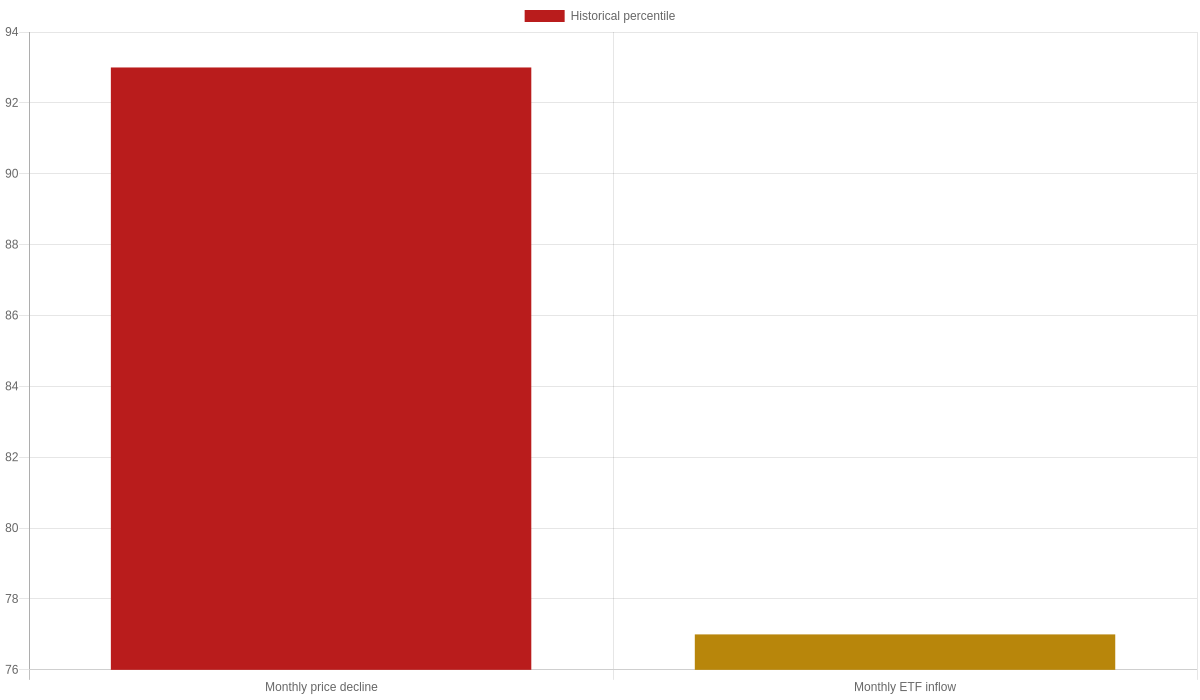
This divergence suggests different investor groups acted on different horizons. ETF buyers added strategic exposure, while futures and spot sellers reacted to higher yields, a firmer dollar and position reduction.
The World Gold Council also noted that bond yields and the dollar rose during the latest week. That combination usually raises the opportunity cost of holding a non-yielding asset.
Three Q4 Signals for the Gold Price Outlook
1. ETF Inflows Must Survive Price Weakness
ETF holdings are the first signal because they reveal whether institutional and portfolio demand remains durable. More than 70 tonnes entered global funds during September despite the price decline.
Continued inflows would show that allocators view the correction as a portfolio entry point. A reversal into outflows would weaken that interpretation and leave gold more exposed to futures positioning.
Investors should distinguish holdings from trading volume. ETF holdings measure metal exposure accumulated by funds, while volume only measures turnover during a session.
2. Real Yields and the Dollar Set the Discount Rate
Gold competes with Treasury securities for defensive capital. Rising real yields increase the return available from inflation-adjusted government debt and can pressure bullion.
The same mechanism affected other assets in the recent Treasury-yield reversal. Bitcoin weakened as yields rose, showing how higher discount rates can reach both digital and physical stores of value.
A weaker dollar would provide a separate tailwind by reducing the cost of dollar-denominated bullion for overseas buyers. A stronger dollar could limit any rebound even if ETF demand remains positive.
3. Fed Expectations Need Confirmation
The Federal Reserve’s next two-day meeting is scheduled for October 27–28. A weaker-than-expected U.S. jobs report and stable inflation reduced expectations for a near-term rate increase, the World Gold Council said.
That shift has not produced a decisive gold rebound. The market still needs confirmation from inflation data, labor indicators and Federal Reserve communication.
The policy setup also matters beyond U.S. markets. Fusion’s Kenya interest-rate preview shows how inflation, currency stability and local yields shape defensive-asset decisions across regions.
Levels That Would Confirm a Gold Rebound
Late October 5 data placed COMEX gold at $4,166.50, with an intraday range from $4,150.40 to $4,198.90. Those levels offer immediate confirmation points rather than long-range price targets.
A sustained move above $4,198.90 would show buyers reclaiming the session high. A break below $4,150.40 would keep short-term momentum weak and could invite another test of September support.
These levels are conditional, not forecasts. Gold can trade through both during volatile sessions, especially when bond yields or geopolitical risk move quickly.
Energy markets remain another inflation channel. The recent G7 oil-reserve release plan targets crude and diesel supply, which may affect inflation expectations if fuel prices ease.
What Could Change the Q4 Setup
A constructive gold setup requires at least two conditions: persistent ETF inflows and easing pressure from yields or the dollar. If only one improves, the September divergence may continue.
The bearish case would strengthen if fund holdings reverse, real yields rise and gold loses the October 5 low. The bullish case would improve if inflows persist and price closes above the latest session high.
The next U.S. inflation and employment releases will test those scenarios before the Federal Reserve meets on October 27–28. That decision, and the accompanying policy guidance, is the next major catalyst for the Q4 gold price outlook.

Elsy kanana
Elsy Kanana is a financial and cryptocurrency journalist at FusionMarketNews, covering digital assets, blockchain technology, financial markets, and emerging fintech trends. Her reporting focuses on market movements, regulatory developments, and on-chain analytics, delivering clear, data-driven insights to readers worldwide.