Key Insights
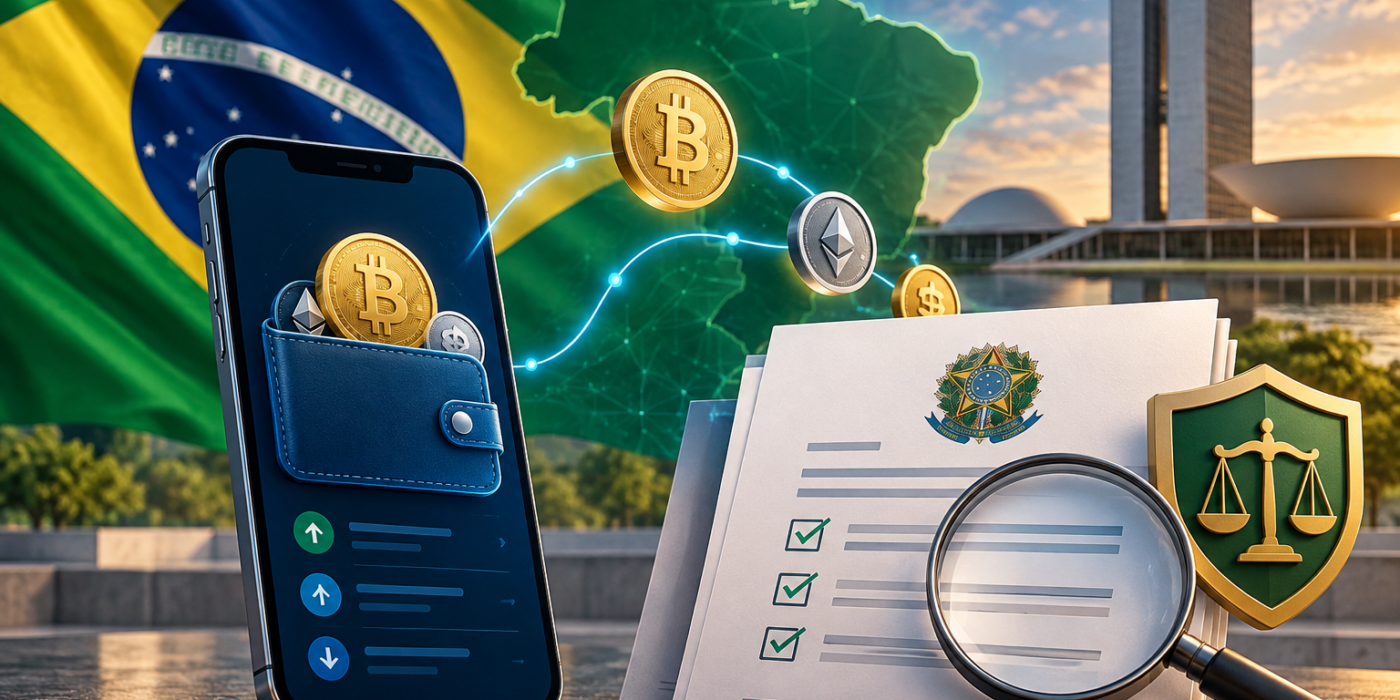
- Brazil’s central bank now requires reporting of self-custody wallet transfers worth $10,000 or more.
- Resolution BCB No. 588 amends Circular 3,978 to add self-custody wallet reporting rules for banks.
- The rule does not ban self-custody wallets or cap transfer amounts, only requiring disclosure.
- Institutions have until October 1, 2026 to prepare systems that flag qualifying transfers.
Brazil will bring large self-custody wallet transfers under mandatory reporting rules from Oct. 1, 2026. The Central Bank of Brazil set a $10,000-equivalent threshold for qualifying virtual asset transfers.
Resolution BCB No. 588 amended Circular No. 3,978, Brazil’s anti-money laundering framework. It covers transfers sent to or received from self-custody wallets through regulated institutions.
The measure requires institutions to report qualifying transactions to the Council for Financial Activities Control, known as Coaf. The threshold itself does not classify a transaction as suspicious.
Why Brazil Is Targeting Self-Custody Wallet Transfers
The Central Bank’s Collegiate Board of Directors approved Resolution No. 588 on September 22, 2026. The resolution updates Article 49 of Circular No. 3,978, which sets out operations that regulated institutions must report to authorities. That article already covers cash payments above R$50,000 and foreign currency transactions above $10,000.
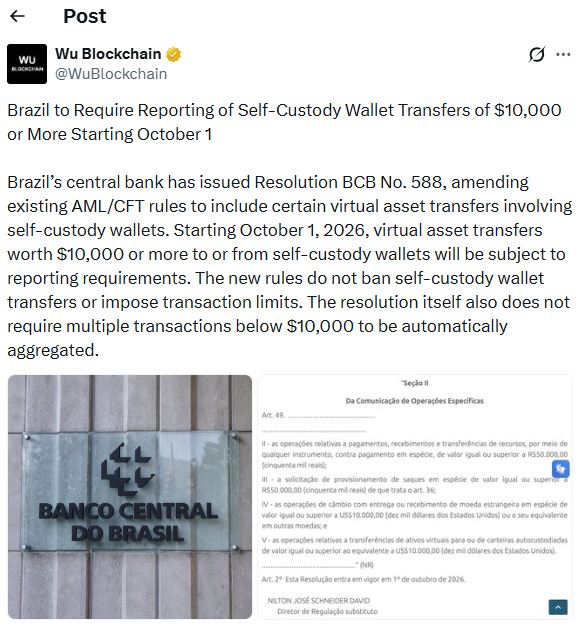
Self-custody wallet transfers now join that same list. Any transfer to or from a self-custody wallet equal to or greater than $10,000 will trigger a reporting obligation once the rule takes effect. A self-custody wallet is one where a person holds their own private keys, rather than relying on an exchange or custodian.
Brazilian authorities framed the update as part of a broader anti-money laundering and counter-terrorism financing effort. The resolution references domestic banking law alongside international conventions on organized crime and terrorism financing. These citations link the new self-custody wallet transfer rule to obligations Brazil has already accepted internationally.
What the Rule Does Not Change
The reporting requirement does not ban self-custody wallets or limit how much users can hold in them. Individuals remain free to transfer virtual assets to or from self-custody wallets without a cap on transaction size. The rule only creates a disclosure obligation once a single transfer meets the $10,000 threshold.
Multiple transfers below that threshold are not automatically combined under the resolution’s text. Each self-custody wallet transfer is assessed on its own value rather than aggregated with other transactions over time. This distinguishes the Brazilian approach from stricter aggregation rules used in some other jurisdictions.
Brazil Self-Custody Wallet Rules Take Effect Oct. 1
The central bank linked the amendment to Brazil’s anti-money laundering and terrorism-financing framework. Circular No. 3,978 already requires covered institutions to maintain monitoring and reporting procedures for financial activity.
Resolution No. 588 extends those procedures to qualifying virtual asset transfers involving self-custody. The reporting threshold uses the equivalent of $10,000 rather than a fixed amount denominated in Brazilian reais.
The Oct. 1 effective date gives regulated firms a short implementation period after publication. Firms processing virtual assets will have to identify qualifying transfers and submit required reports within the prescribed timeframe.
The rule also separates automatic threshold reporting from suspicious-activity reporting. A transfer above $10,000 triggers disclosure, but the threshold alone does not establish wrongdoing.

Amoh Solo
My work sits at the intersection of crypto journalism, market research, and Web3 content. I cover Bitcoin and the wider cryptocurrency market, with particular interest in ETFs, blockchain technology, DeFi, regulation, adoption, and emerging projects. Whether I’m working on a news story, market analysis, opinion piece, or thought-leadership article, I focus on making complex developments easy to follow while keeping the content well researched, relevant, and engaging for readers.