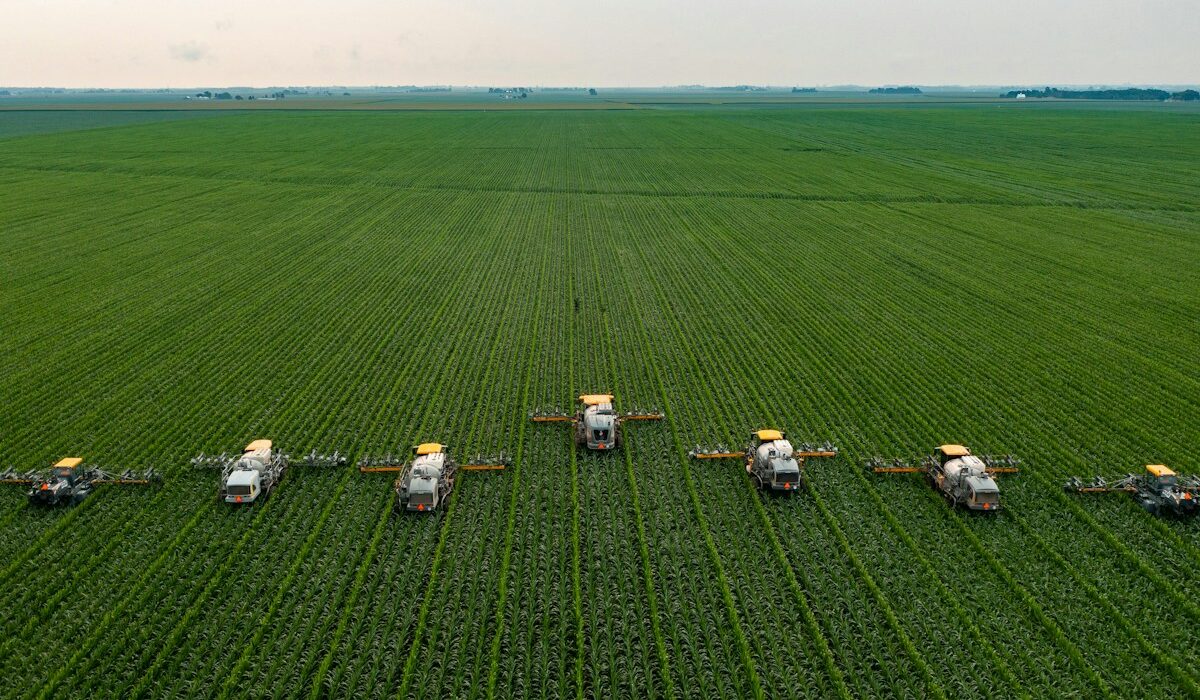
The Commodity Futures Trading Commission and Kansas State University will hold AgCon 2026 on October 22–23 in Overland Park, Kansas. The two-day conference puts agricultural derivatives, clearing access, artificial intelligence and farm-economy conditions on the same agenda.
The CFTC announced the agenda on September 10, more than a month before the event. That distinction matters for readers tracking the calendar: the policy discussion is upcoming even though the source release is not new.
What CFTC AgCon 2026 will cover
The CFTC’s official announcement says regulators, farmers, agribusinesses, traders, exchanges and academics will discuss the changing structure of agricultural futures markets. The agency identified emerging markets, contract convergence, financing and market data among the principal topics.
Access to clearing is especially relevant for smaller market participants. Futures users typically need a clearing relationship and sufficient collateral to hedge prices, and changes in financing costs or intermediary capacity can affect how practical those tools are. That makes clearing access a market-function question as much as a compliance topic.
The agenda sits within a broader derivatives-policy environment. Fusion Market News has also covered the CFTC’s proposed treatment of event contracts as swaps and a separate rule addressing casino-style bets in derivatives markets.
Why AI and data belong in farm-market policy
Artificial intelligence is listed as a conference topic alongside data and market structure. In agricultural markets, these subjects can meet in crop forecasting, logistics, pricing, surveillance and risk analysis. Better tools may help firms process weather, production and positioning data, but they also raise questions about model reliability, access and the concentration of technology among large participants.
The CFTC did not announce an AI rule in its September release. The conference therefore should be read as a venue for gathering views and testing policy concerns, not as evidence that a specific requirement is imminent.
Contract convergence is another practical issue. A futures contract works best as a hedge when its price approaches the underlying cash market near expiration. Persistent divergence can weaken the contract’s usefulness for producers and commercial firms, so discussion may focus on delivery terms, regional price differences and changing supply chains.
What market participants should watch
The most consequential signals may come from how officials frame the balance between market innovation and reliable hedging. Participants should watch for discussion of clearing capacity, data transparency, liquidity and whether emerging products serve commercial risk-management needs.
The meeting could also show how the CFTC views technology across product categories. Our report on the delayed CME compute-futures launch illustrates how novel contract design can depend on regulatory review and operational readiness.
AgCon is the fourth edition of the conference, according to an earlier CFTC and Kansas State announcement. Chairman Michael S. Selig said the event is intended to keep the agency focused on markets that help producers manage risk. The October sessions should provide a timely read on which market-structure problems farmers, intermediaries and regulators consider most urgent.

Sharron Kendi
Sharron Kendi is a seasoned crypto market analyst and writer with over three years of experience decoding blockchain trends, price movements, and market dynamics. She holds a Bachelor’s Degree in Commerce (Finance) from Kenyatta University, blending a solid academic foundation with a sharp eye for technical analysis and a deep understanding of on-chain data. Her work delivers clear, data-driven insights that empower investors to navigate the fast-evolving digital asset space with confidence.