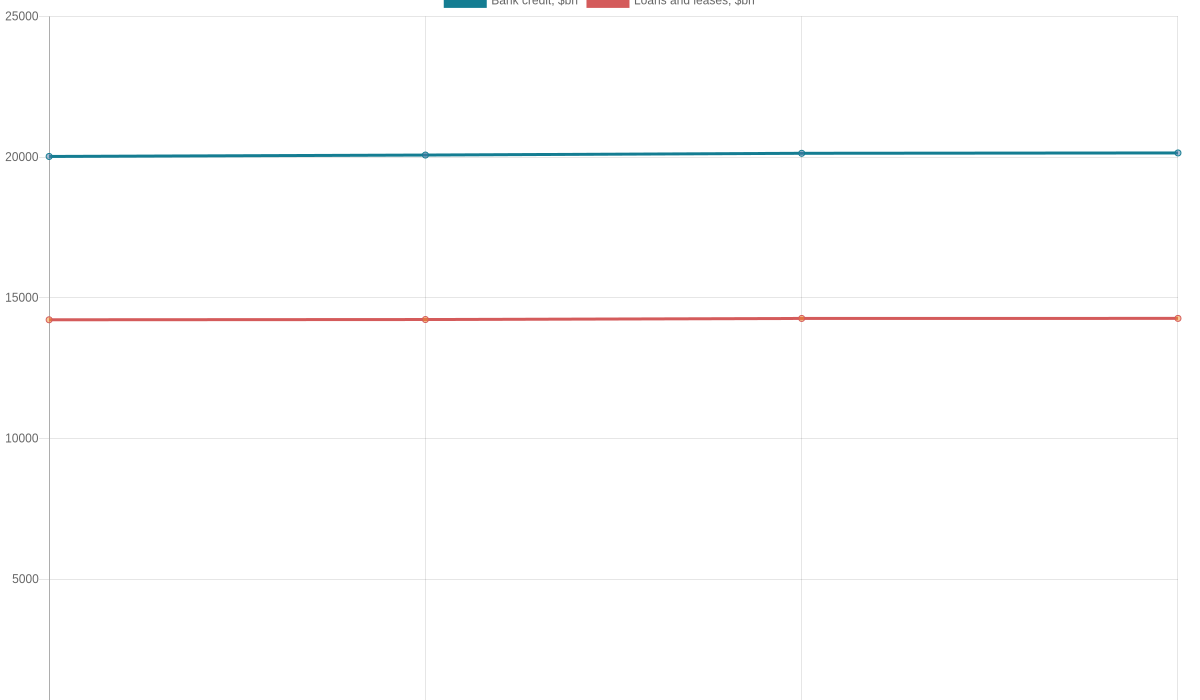
U.S. commercial bank credit reached a seasonally adjusted $20.147 trillion in the week ended November 18, according to the Federal Reserve’s latest H.8 statistical release. The central bank published the figures on November 27, nine days after the measurement date.
Key Insights
- U.S. bank credit reached $20.147 trillion.
- Loans and leases totaled $14.267 trillion.
- Weekly credit growth slowed to $12.7 billion.
US bank credit extends its November rise
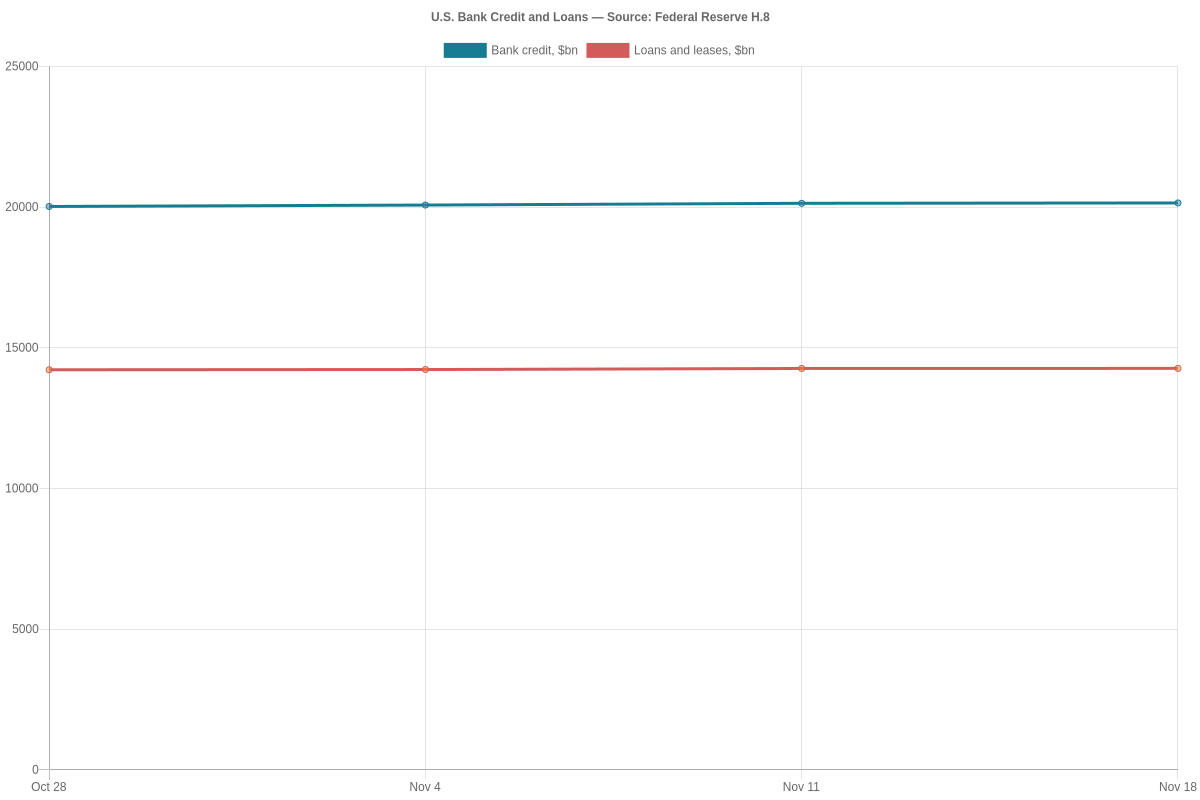
Bank credit increased by $12.7 billion from November 11 after gaining $62.3 billion in the prior week. The four-week series rose from $20.022 trillion on October 28 to $20.147 trillion on November 18.
Loans hold above $14.26 trillion
Loans and leases increased by $1.8 billion during the latest week to $14.267 trillion. Securities in bank credit rose by $11.0 billion to $5.880 trillion, including $4.867 trillion of Treasury and agency securities.
The lending total provides a banking-system counterpart to the BIS measure of cross-border lending to non-bank financial intermediaries. It also adds context to the new consumer-credit disclosure threshold taking effect in 2027.
Why investors watch the weekly H.8 release
Bank credit can show how quickly financial conditions reach households and businesses between monthly economic reports. Weekly moves can be volatile, so the direction across several observations usually matters more than a single change.
The latest increase arrived alongside diverging real-estate conditions, with global inflation-adjusted house prices falling even as most reporting markets posted gains. Investors will need subsequent H.8 releases to determine whether November’s credit expansion persists.

Sharron Kendi
Sharron Kendi is a seasoned crypto market analyst and writer with over three years of experience decoding blockchain trends, price movements, and market dynamics. She holds a Bachelor’s Degree in Commerce (Finance) from Kenyatta University, blending a solid academic foundation with a sharp eye for technical analysis and a deep understanding of on-chain data. Her work delivers clear, data-driven insights that empower investors to navigate the fast-evolving digital asset space with confidence.