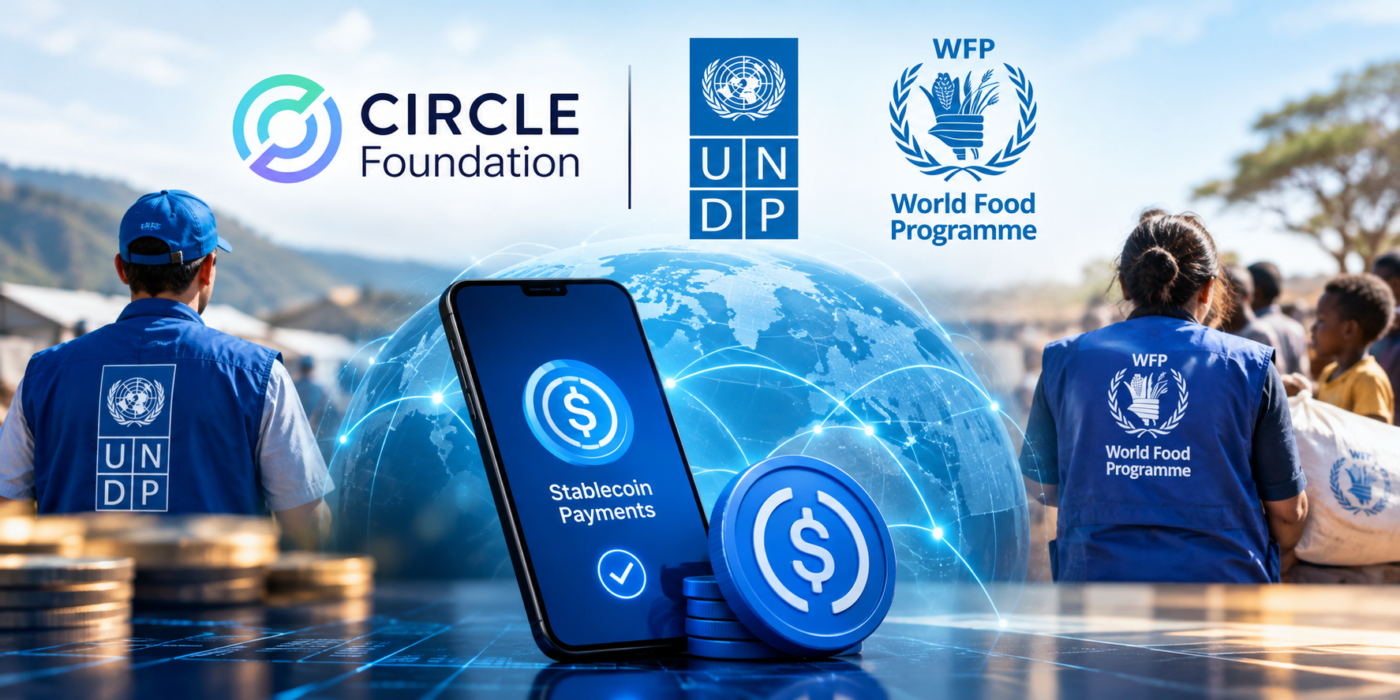
Circle Foundation has awarded two grants to support digital payment initiatives by the United Nations Development Programme (UNDP) and World Food Programme (WFP), with the organizations set to examine how regulated stablecoins and other digital payment methods could improve development and humanitarian funding.
The foundation announced the grants on Sept. 25, saying the funding will help both UN agencies assess whether digital payments can deliver funds to recipients more quickly and at lower cost.
The two projects will take different approaches. UNDP will prioritize scaling up digital payment modalities that have been piloted individually in the form of projects, and WFP will build the infrastructure, controls and partnerships required for the stablecoin payments pilot.
UNDP to Expand Digital Payment Experiments
Through its grant, UNDP will create and maintain a Digital Asset Innovation Pool to enable country offices to identify opportunities where stablecoins regulated by payment systems may be suitable for development programming.
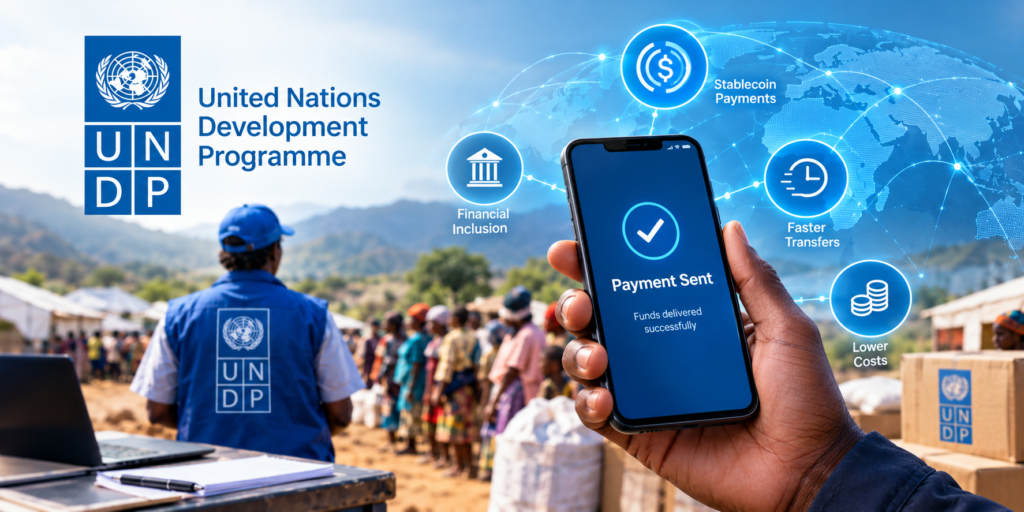
The pool will offer guidance on local regulations, requirements and protection for those who receive payments. It will also include instruments to gauge transaction speed, reach and costs.
Digital payments may provide another alternative where conventional financial systems cause delays, are expensive or inaccessible, UNDP said. Banking and payment channels will remain as is and will be supplemented with new solutions.
The agency already has a track record in testing digital payment systems in various countries.
UNDP piloted a digital payments approach to cash-for-work in Aleppo, Syria. Additionally, the organisation did a payment pilot in Haiti under restricted connectivity conditions. Other projects in Guatemala examined remittances and community investment, and a program in The Gambia made a link between mobile wallets and the existing cash-agent network.
Previously, UNDP had reported that it was able to lower distribution costs from 10% to 2% through its pilot work in Syria. It also claimed that it was able to process payments during a cellular network outage while conducting a Haiti pilot.
The new pool will aid in making payment solutions more accessible, faster, and less expensive, especially for those who have been underserved by traditional banking services,said Robert Pasicko, a team lead at UNDP’s Alternative Finance Lab.
WFP Prepares Stablecoin Payment Trials
WFP will utilize its grant to help establish the systems needed for upcoming stablecoin payment testing.
WFP and its Innovation Accelerator will support governance and risk frameworks; treasury management; cross-country compatible reconciliation systems and compliance tools.
The organization will also establish partnerships with local fintech companies and mobile-money providers. The intention of these connections is to enable digital transfers to be made to the recipients via financial services that are already available in their local markets.
WFP will be implementing payment systems in 2-3 country corridors over the next three years.
The trials will look at aspects such as efficiency of payments, transparency, resilience etc. The cost and transaction speed of the transactions will also be evaluated in the same independent research and if regulated stablecoins are effective to be used in humanitarian operations.
With the funding, WFP will be able to explore regulated stablecoin payments in real-world contexts and build the evidence and infrastructure for the next steps in the assessment process, said Bernhard Kowatsch, director of WFP Global Accelerator and Ventures.
Circle Expands Its UN Payment Initiative
The new awards are an extension of the United Nations’ collaboration with Circle Foundation.
In January, the foundation announced its support for the Digital Hub of Treasury Solutions, a new shared UN platform launched in 2021 to digitalise financial operations across the UN system.
There are 15 organizations involved on the platform including UNDP and WFP. The previous financing was used for programs on cross-border transfers, local currency conversion and linkages among financial systems, Circle said.
The foundation also revealed its first U.S. grants on Sep. 22 is donating money to Accion Opportunity Fund and Pacific Community Ventures for small-business lending and data tools initiatives.
Circle Foundation is financed by Circle Internet Group, a company with shares listed on the New York Stock Exchange (NYSE) under the ticker CRCL. Circle has pledged approximately 1 percent of its equity through company filings to allot up to 2,682,392 Class A shares to be allocated over 10 years for foundation contributions.
The new announcement names as the recipient World Food Program USA, which will receive the funding to WFP and the WFP Innovation Accelerator, as they enter into a testing phase of digital payment systems in humanitarian operations.

Haider Ali
Haider Ali is a cryptocurrency journalist and blockchain news analyst with five years of experience covering breaking news, market trends, regulation, and emerging developments. His work has appeared in The Bit Journal, CoinGape, The Cryptocurrency Post, TronWeekly, and TurkishNYRadio. He specializes in Bitcoin, Ethereum, DeFi, Web3, exchanges, regulation, and financial markets, providing clear, data-driven insights.