Key Insights
- USDAU stablecoin issuer AllUnity launched the dollar token across six blockchain networks.
- The token is structured as an e-money token under the European Union’s Markets in Crypto-Assets Regulation.
- Banking Circle provides reserve and transaction banking, while Flowdesk supports liquidity.
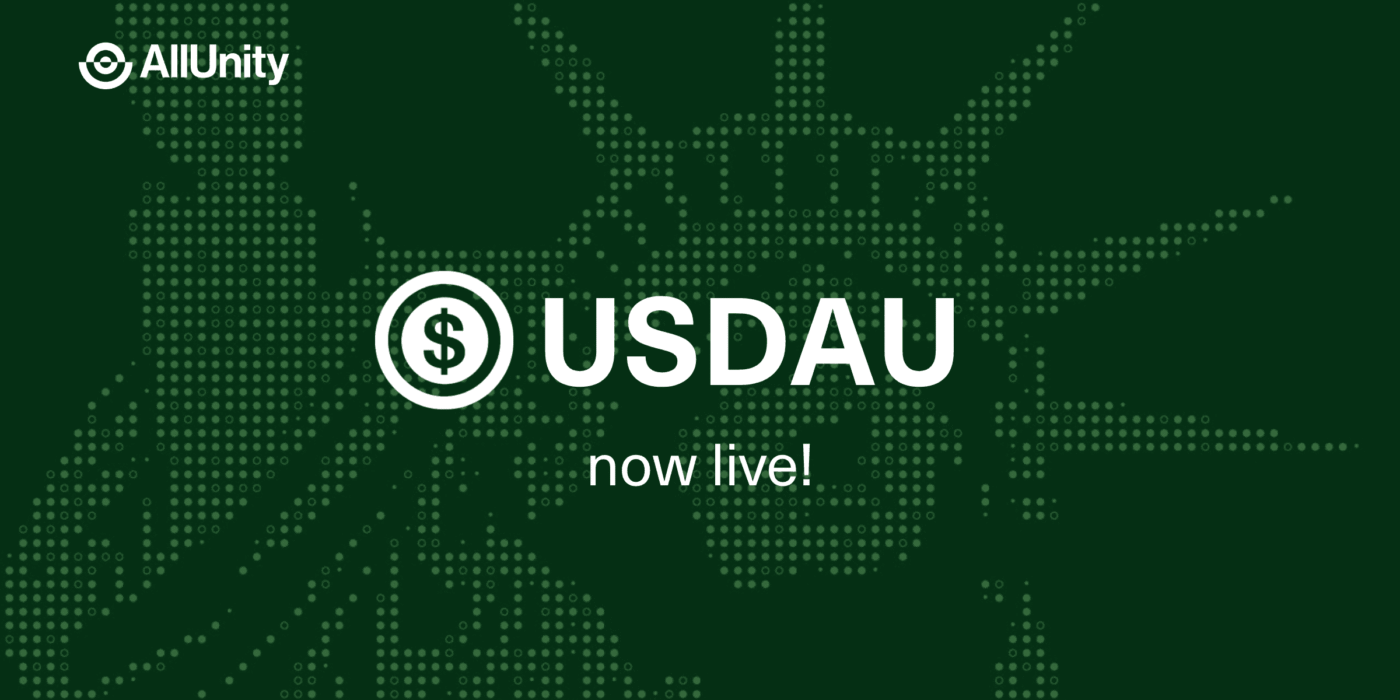
German-regulated issuer AllUnity launched its USDAU stablecoin across six blockchain networks, extending Europe’s regulated token market beyond euro-denominated products.
The company announced the launch on Sept. 30. USDAU debuted on Ethereum, Solana, Base, Tempo, Arc and Polygon.
USDAU Stablecoin Uses Segregated Dollar Reserves
AllUnity said USDAU is pegged one-to-one to the U.S. dollar and backed by segregated dollar reserves. The issuer said holders can redeem the token at par.
AllUnity operates as a licensed electronic money institution under Germany’s Federal Financial Supervisory Authority, known as BaFin. It structured USDAU as an e-money token under the European Union’s Markets in Crypto-Assets Regulation, or MiCAR.
The USDAU stablecoin joins AllUnity’s euro, Swiss franc and Swedish krona products. The company is targeting corporate treasury, settlement and cross-border payment activity rather than presenting the token as an unregulated offshore dollar.
AllUnity also added instant foreign-exchange functionality to its Business Mint Account. The service lets institutional customers move between supported fiat currencies and stablecoins through one account.
Banking Circle Backs USDAU Reserve Infrastructure
Banking Circle confirmed that it provides reserve and transaction banking services for USDAU. Its role covers the fiat reserves backing the token.
Flowdesk serves as the designated liquidity provider. Archax acts as a direct minting and redemption partner, while Hercle supports off-ramp and foreign-exchange services.
AllUnity also named BitGo, Galaxy, Bitcoin Suisse and RULEMATCH among launch ecosystem partners. Fully onboarded institutional clients can mint and redeem through AllUnity’s Business Mint Account.
The launch adds another regulated stablecoin structure as payment companies and crypto firms compete over tokenized cash. Fusion Market News previously covered Circle-backed stablecoin payment tests and stablecoin reserve-rule developments tied to Coinbase, showing how issuers are expanding beyond trading use cases.
USDAU Stablecoin Tests Europe’s Dollar Demand
The USDAU stablecoin creates a market test for dollar tokens issued inside the European Union’s regulatory framework. Dollar stablecoins already dominate crypto settlement, but much of that supply comes from issuers with different regulatory structures.
MiCAR gives AllUnity a defined European compliance route, but regulation alone does not establish adoption. Liquidity, exchange support, redemption reliability and institutional demand will determine how quickly USDAU gains circulation.
Multi-chain distribution may improve accessibility. It also spreads activity across networks with different transaction costs, liquidity conditions and smart-contract environments. Related tokenized-asset rules in the U.S. show how regulators are also addressing around-the-clock digital market structures.
AllUnity said it plans to add further networks later this year. The next measurable indicators will be circulating supply, exchange liquidity and actual settlement volume across the six launch chains.

Sharron Kendi
Sharron Kendi is a seasoned crypto market analyst and writer with over three years of experience decoding blockchain trends, price movements, and market dynamics. She holds a Bachelor’s Degree in Commerce (Finance) from Kenyatta University, blending a solid academic foundation with a sharp eye for technical analysis and a deep understanding of on-chain data. Her work delivers clear, data-driven insights that empower investors to navigate the fast-evolving digital asset space with confidence.