Bitcoin and Ethereum remained relatively close to their recent highs as renewed diplomatic efforts between the United States and Iran brought the possible reopening of the Strait of Hormuz back into focus.
Tehran’s foreign minister Abbas Araghchi announced on Thursday that the country made a seven-day proposal to the U.S. government via intermediaries. According to the proposal, hostilities will cease, and the re-opening of the Strait of Hormuz and further negotiations regarding the nuclear program will take place.
The proposed deal has several preconditions, among which there is an end of hostilities, unfreezing of Iranian assets, easing of sanctions on Iranian oil exports, and removal of the U.S. naval blockade of the region. Iran will re-open the crucial
The opening of the Strait of Hormuz has put focus back on oil prices and financial markets because the strait plays a crucial role in international oil transport and hence will help ease any supply fears which may have been fueling crude prices upwards during the crisis.
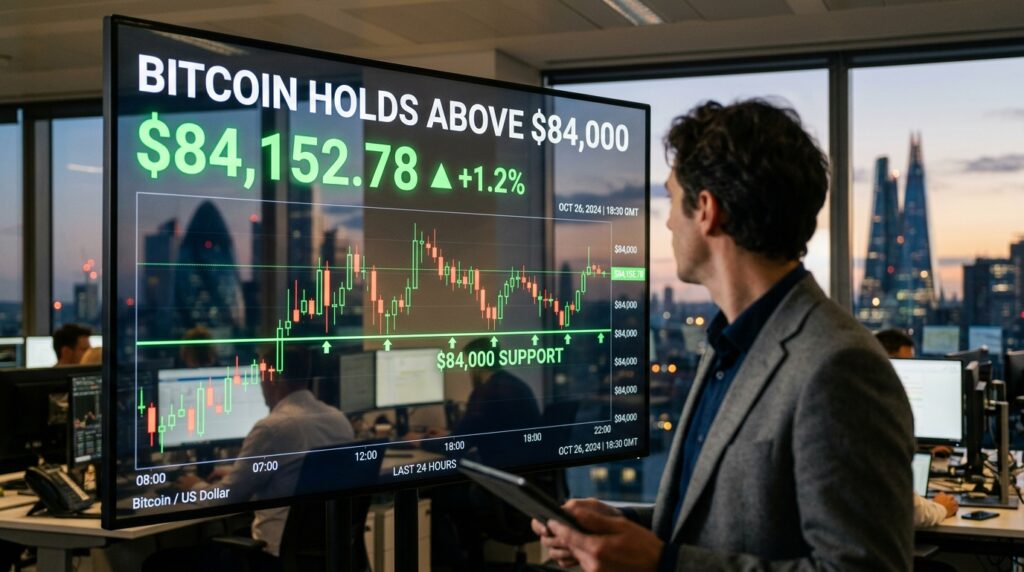
Bitcoin Holds Above $84,000
Bitcoin’s performance continues to be strong even with the challenging macroeconomic environment. The crypto asset climbed above $86,000 earlier in the week but has since corrected back towards the $84,000 mark. On Sept. Bitcoin surged to new highs, exceeding $86,000 for the first time since early January, as a result of continued institutional buying and ETF inflows.
Spot Bitcoin ETFs based in the U.S. also had another positive session on Sept. 23 had about $347 million in net inflows, furthering the inflow trend to five sessions.
That demand has helped the stocks as the Treasury yields have risen. On Sept., the 10-year Treasury yield flirted with about 5.11%. According to the market reports, the 24-year yield climbed to 24%, with the 30-year yield rising above 5.4%.
A higher yield can make a risk-sensitive asset more challenging since there are comparatively higher returns on government bonds. This price movement for Bitcoin has thus indicated a balance between spot demand and stricter financial conditions.
Ethereum Remains Below $2,800
Ethereum has been following the same trend. ETH is gaining momentum on approach to $2,800 before losing steam and heading back towards the $2,600-$2,700 zone.
Spot Ethereum ETFs have been drawing in investors. The net inflow to U.S. spot Ethereum ETFs was around $105 million on Sept. 23, continuing their run of good results on the ice with four straight wins.
This new recovery, then, has been despite pressures of high yields and energy prices. The broader risk level will play a key part in whether Ethereum will hold above recent levels, as will diplomatic progress.
Why Hormuz Matters for Crypto Markets
If the Strait of Hormuz is reopened, this may indirectly impact the crypto markets as a result of oil price, inflation expectations and Treasury yields.
The oil prices are particularly sensitive to developments related to the conflict. Brent fell below $100 in one market reaction after reports earlier this week of Iran planning to resume operations at Hormuz within a week.
The removal of all restrictions and oil shipping disruptions would heighten further pressure on oil prices due to less uncertainty in the supply. Reduced energy costs also could ease one inflationary threat to the U.S. economy.
That is particularly relevant for Bitcoin and Ethereum, as inflation is still a key factor in Federal Reserve policy. The Fed hiked its key interest rate by 25 basis points on Sept.16 to a new 3.75%-to-4% range, officials kept warning of high inflation.
This downward trend in oil prices could, therefore, shift expectations regarding the inflation and monetary policy ahead. But falling oil prices would not mean falling Treasury yields or financial conditions, however.
Previous Hormuz Agreements Remain a Risk

The new plan is also in doubt, as similar attempts to get ships back across the Strait of Hormuz failed in the past.
In June, Iran and the United States signed an MOU (Memorandum of Understanding) meant to aid in commercial shipping during negotiations. Some disagreements arose over control of the waterway and other conditions, which led to the collapse of the arrangement.
The latest proposal is similar in some respects but sets a much shorter timetable. Tehran’s new proposal would see the reopening of the strait after seven days, as opposed to weeks, if its criteria were fulfilled. Recent reports also suggest Iran has set a time limit on Washington’s response. Diplomatic developments will have a special impact on oil prices for markets.
Bitcoin and Ethereum Face Key Levels
Bitcoin’s price action has come to a standstill near the $87,000-$87,400 range, making the price area a crucial zone for those who are closely monitoring the upcoming price direction. But a rally back over the recent highs will make the $87,700 yearly open more attainable in January.
The downside is that the $82,000 area has become an interesting benchmark, with the larger $80,000 area being the next benchmark.
Ethereum has come up against resistance at $2,700 and the recent spike to the upper bound of $2,789. The $2,800 level would be a further sign of the recent recovery, while the $2,630-$2,650 range would serve as a high-stakes support level in the near term.
The $2,532-$2,550 area would be next on the radar screen for a deeper pullback.
Markets Await the Next Diplomatic Signal
The near-term prospects for the two cryptocurrencies are closely tied to market events outside of the digital-asset space.
A sustained opening of the Strait of Hormuz could alleviate energy supply concerns and could help dampen some inflationary pressure. Meanwhile, the Fed’s inflation bias will keep driving Bitcoin and Ethereum rates, as well.
Investors are now waiting to see if Washington will make any moves in response to Tehran’s seven-day offer and if any tangible decisions will be reached to resume shipping through the strait. The talks are mediated, and Iran has said it is ready to start implementing the plan if Washington agrees, U.S. officials have said, but not to reach an agreement.
That’s when the next Bitcoin and Ethereum move is up for grabs due to a range of factors including geopolitical, oil price, treasury yields and continued ETF demand.

Haider Ali
Haider Ali is a cryptocurrency journalist and blockchain news analyst with five years of experience covering breaking news, market trends, regulation, and emerging developments. His work has appeared in The Bit Journal, CoinGape, The Cryptocurrency Post, TronWeekly, and TurkishNYRadio. He specializes in Bitcoin, Ethereum, DeFi, Web3, exchanges, regulation, and financial markets, providing clear, data-driven insights.